

Your Power Partner
Cooling Challenges in GE 7FA Turbines
Think of a gas turbine like a high-performance engine in a race car — push it hard in summer heat without adequate cooling, and performance falls apart. For engineers and plant managers operating heavy duty gas turbines, thermal management is foundational to power output, component longevity, and operational reliability.
GE’s 7FA model stands as one of the most widely deployed machines in the F-class lineup, valued for its efficiency and durability across demanding environments. But its high-firing-temperature design creates specific thermal vulnerabilities that require disciplined attention.
The GE machine operates across a wide range of conditions — from power plants along the humid Gulf Coast to installations in arid industrial climates. In each setting, ambient temperature swings, inlet air quality, and combustion dynamics generate a unique set of challenges for cooling systems.
Understanding how these forces interact with the turbine’s design helps operators protect critical assets and maintain consistent performance through years of operation.
This article examines the core cooling challenges present in heavy duty gas turbines, the systems engineered to address them, and the maintenance practices that keep those systems reliable over time.
Key Takeaways
- Rising ambient temperature directly reduces gas turbine power output, making inlet cooling one of the most effective forms of power augmentation available.
- The casing, turbine blades, and compressor section each face distinct thermal stresses that require targeted cooling strategies.
- Inlet fogging, evaporative cooling, and wet compression offer different trade-offs in capital cost and suitability for varying ambient conditions.
- Duct firing and multi-shaft configurations introduce additional thermal complexity that affects turbine inlet conditions and combustion demands.
- Proactive maintenance planning must account for cooling system wear to prevent unscheduled shutdowns and extend service intervals.
Cooling Demands of Heavy Duty Gas Turbines
How Ambient Temperature Affects Turbine Performance
A gas turbine breathes air the way a car engine does — and like a car engine, it runs less efficiently when incoming air is hot and thin. As ambient temperature rises, air density falls. That means lower mass flow rate through the compressor, less oxygen available for combustion, and reduced power per cycle. On hot summer days, a gas turbine can lose 10–15% of rated output due to elevated ambient conditions alone.
This sensitivity to air temperature is a thermodynamic reality, not a design flaw. The operational challenge is managing it systematically so that turbine performance remains predictable regardless of ambient conditions.
The Relationship Between Inlet Air and Power Output
The turbine inlet is the first point of thermal management in the power cycle. Inlet air enters through the air filtration system and reaches the compressor section. Any increase in inlet air temperature increases the work of pressurizing the incoming air, which reduces the net power output at the turbine generator.
Reducing inlet temperature — even by 10–15°F — can improve power output and heat rate meaningfully. This is the logic behind inlet cooling: one of the most cost-effective power augmentation strategies a power plant operator has available.
Why the GE F-Class Runs Hot by Design
The GE F-class architecture is built for high firing temperatures and maximum efficiency per combustion event. That aggressive design approach tightens the margin between normal operating conditions and component stress thresholds. The casing, first-stage vanes, and turbine blades all operate near their material limits at full load. When ambient temperatures climb or cooling systems degrade, that margin contracts quickly.
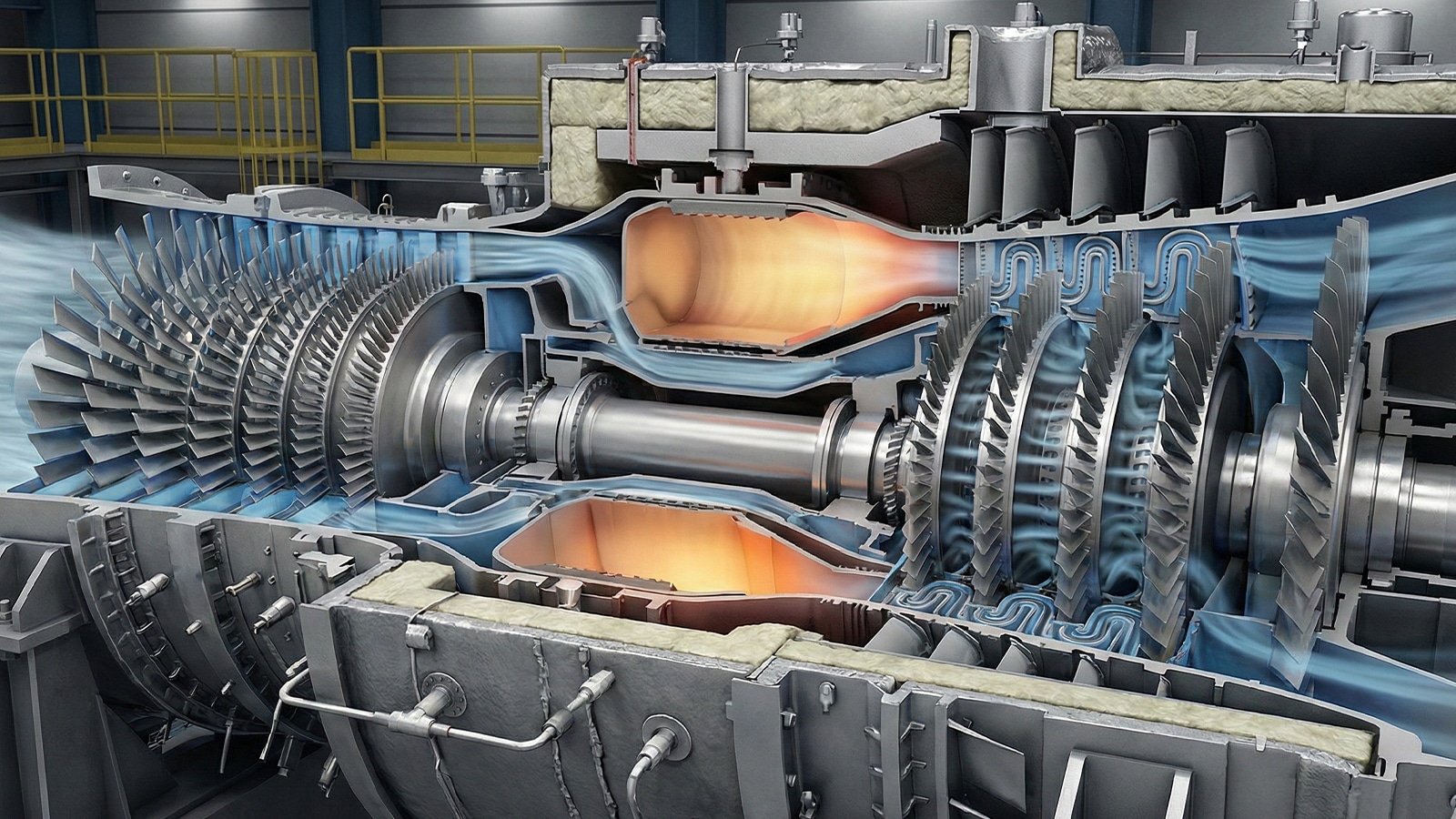
Inside the GE 7FA Cooling Systems
Compressor Section Cooling and Air Flow
The compressor draws large volumes of air and raises its pressure through a series of rotating stages. Think of it like a bicycle pump warming in your hand as you inflate a tire — the faster you pump, the hotter it gets. The compressor is not a cooled section; instead, airflow and material design manage thermal effects from compression heating.
Extracted cooling air is routed through internal passages to protect hot-section components — including first-stage vanes and turbine blades — before they encounter peak combustion temperatures.
Turbine Blade and Vane Cooling Mechanisms
Turbine blades operate in gas streams that exceed the melting point of the base metal. They survive through advanced alloy metallurgy and internal cooling passages — channels machined into each blade that circulate air to absorb heat before it conducts through the blade substrate.
First-stage vanes face the hottest gas directly downstream of the combustion zone. Cooling these vanes precisely is paramount to preventing cracking and extending inspection intervals. Any degradation in cooling passage integrity — from oxidation, deposition, or mechanical damage — accelerates wear and shortens service life.
Casing and Stator Thermal Management
The casing of a heavy duty turbine performs both structural and thermal functions. It contains the hot gas path while providing mounting surfaces for stator components. In the GE design, the casing experiences significant thermal gradients between cold startup and full-load operation. Thermal insulation and controlled cooling air routing manage casing expansion, which directly affects tip clearances and overall system performance.
Stator components surrounding the hot gas path require consistent cool air to prevent thermal distortion. Distorted casing sections can cause seal failures or elevated gas leakage — both reduce efficiency and can trigger a forced shutdown.
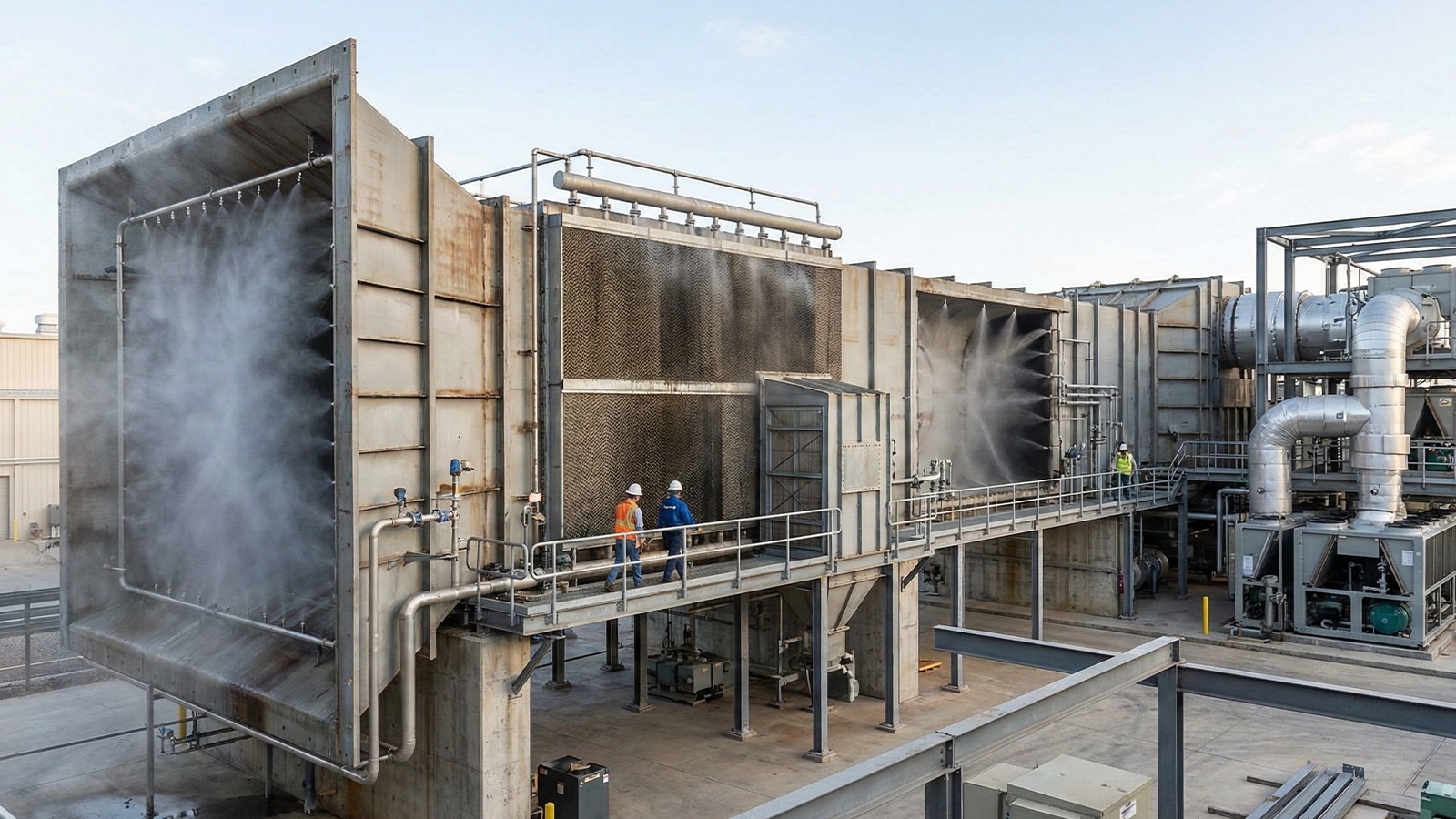
Gas Turbine Inlet Cooling Methods Compared
Not all inlet cooling approaches are equal. The right method depends on local climate, capital cost tolerance, and the turbine’s operating profile. The four most common approaches each suit different ambient conditions.
- Inlet Fogging: High-pressure nozzles inject fine water droplets into the air stream at the bell mouth. As droplets evaporate, they absorb heat and reduce air temperature before it reaches the turbine inlet. Most effective in low relative humidity environments.
- Evaporative Cooling: A wetted media pad saturates incoming air as it passes through the air intake. Lower capital cost than fogging, but performance approaches a ceiling at the wet bulb temperature of the local ambient air.
- Wet Compression: Water is injected into the air intake system, cooling the air and increasing mass flow before it enters the rotating stages. This can generate a significant power increase but requires careful system design to prevent blade erosion.
- Mechanical Chilling: A refrigeration-based system that uses a compressor, evaporator, and condenser cycle to actively reduce inlet air temperature independent of ambient humidity. Unlike evaporative methods, mechanical chilling does not rely on wet-bulb conditions and can deliver consistent power augmentation across a wide range of climates.
Inlet Fogging and Wet Compression
Inlet fogging uses a high-pressure pump and nozzle array to atomize water at the air intake bell mouth. Droplet size is calibrated for complete evaporation before air reaches the turbine. Wet compression intentionally introduces water further downstream, where continued evaporation cools the air and increases mass flow. Both methods require precise control system management to prevent ice formation at low ambient temperatures and maintain stable airflow conditions within the system.
Evaporative Cooling and Mechanical Chilling
Evaporative cooling systems are widely installed due to their low capital cost and mechanical simplicity. They draw heat from incoming air as water evaporates through a media pad, but lose effectiveness as relative humidity climbs. In humid climates, these systems deliver marginal gains on hot summer days. Mechanical chilling resolves this by conditioning inlet air to a defined temperature set point regardless of ambient humidity — the preferred approach where consistent power output is the priority.
| Cooling Method | Capital Cost | Humidity Sensitivity | Power Augmentation |
|---|---|---|---|
| Inlet Fogging | Low–Medium | Moderate | Moderate |
| Evaporative Cooling | Low | High | Low–Moderate |
| Wet Compression | Medium | Moderate | High |
| Mechanical Chilling | High | None | High |
Duct Firing, Combined Cycle Operations, and Cooling System Demands
Managing HRSG and Heat Recovery Steam Dynamics
In a multi-shaft gas turbine configuration, exhaust gas feeds a heat recovery steam generator — or HRSG — which produces steam to drive a steam turbine. This arrangement significantly improves plant efficiency but constrains how the gas turbine can be operated. Exhaust temperature and gas flow must remain within parameters the HRSG is designed to accept. Changes in inlet cooling affect exhaust conditions, so adjustments to inlet temperature ripple through to steam turbine performance and overall heat rate.
How Duct Firing Affects Turbine Thermal Load
Duct firing introduces supplemental fuel burners into the HRSG to boost steam output during peak demand periods. It does not directly affect the turbine inlet but raises exhaust gas temperatures and places additional thermal load on casing components and the cooling circuits managing the transition between the turbine and the HRSG.
Blade Fatigue Under Elevated Operating Conditions
When ambient temperatures are high and inlet cooling systems underperform, the turbine’s rotating stages experience elevated thermal and mechanical stress. High-pressure stage blades face greater loading as the system works harder to achieve operating pressure. Repeated heating and cooling cycles — particularly in daily start-stop operations — accelerate blade fatigue and shorten effective service intervals.
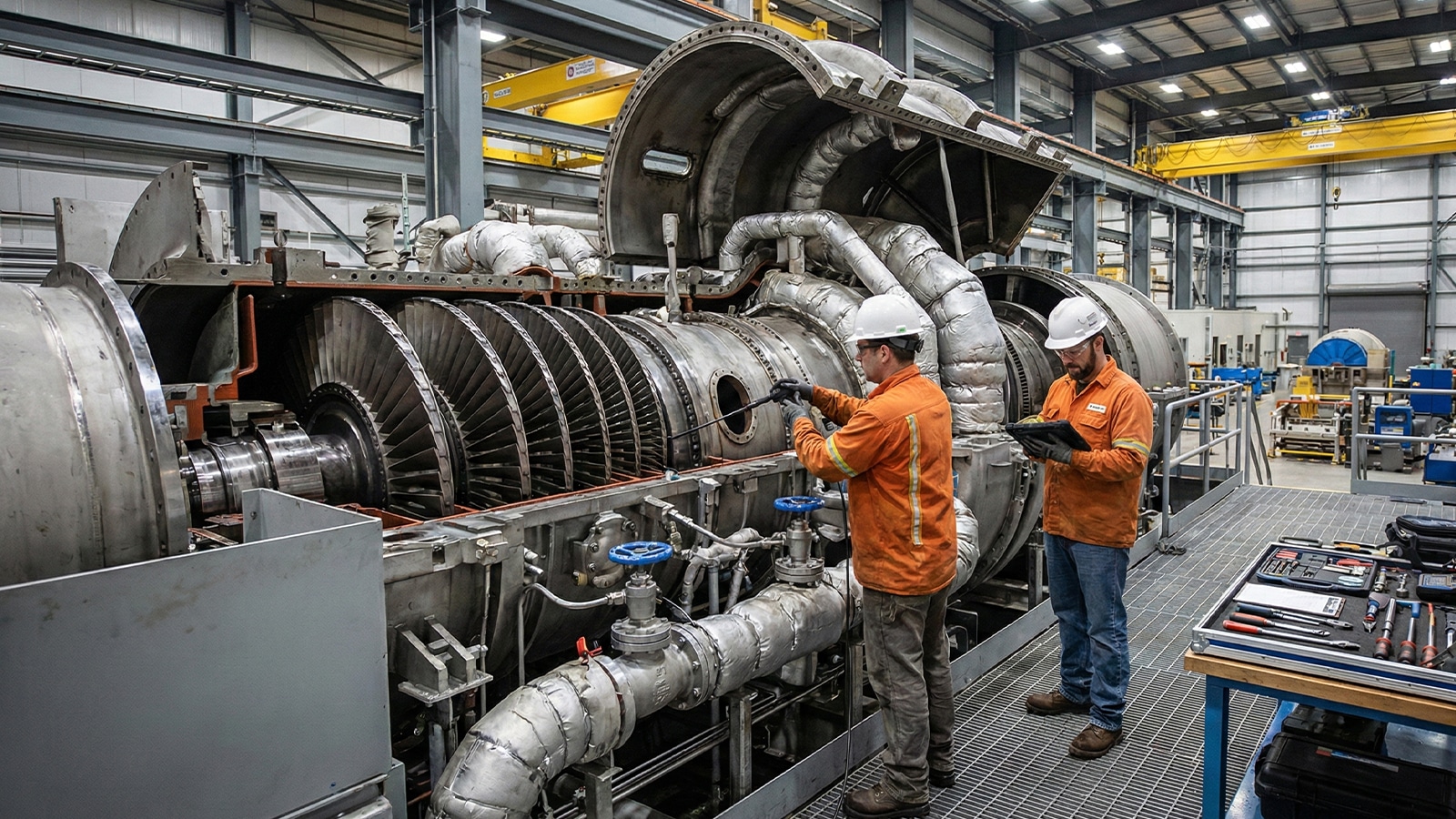
Maintenance, Outage Planning, and Cooling System Reliability
Common Cooling-Related Failure Points
Cooling-related failures most commonly originate in three areas: degraded internal cooling passages in first-stage blades and vanes, fouled air filtration reducing air flow to the turbine, and failed cooling system components including pumps, nozzles, and valve assemblies. Each failure mode reduces thermal protection for downstream components and compounds wear over time.
Inspecting Valves, Casing, and Hot-Section Components
Routine inspection intervals should include function checks for cooling air control valve assemblies, casing inspections for thermal distortion and seal integrity, and review of hot-section components — including transition pieces and liners — that operate at peak temperature and mechanical load. Any degradation in their condition directly affects how effectively cool air reaches the first stage of the turbine.
Outage Scheduling Around Cooling Performance Trends
Cooling system degradation rarely announces itself dramatically. It surfaces gradually — as a slow erosion of generation capacity, creeping rises in component temperatures, or an increasing heat rate. Operators who monitor these trends can schedule corrective maintenance during planned outage windows rather than reacting to forced shutdowns.
When maintenance isn’t enough and your GE 7FA needs expert repair or cooling system service, Allied Power Group are the experts.
Conclusion
Cooling is not a secondary consideration in a gas turbine — it is a foundational requirement that runs through every major system from the air intake through the hot section to the casing and exhaust. Ambient temperature, inlet air quality, and the thermal demands of the surrounding plant configuration all converge on the cooling system and determine whether the machine performs as designed or begins to degrade.
Allied Power Group brings deep technical expertise in turbine cooling diagnostics, component repair, and outage planning for GE F-class machines and other heavy duty gas turbines. Serving clients worldwide from Houston, Texas, Allied Power Group understands the operational realities that engineers and plant managers face across every climate and configuration.
FAQ
Why does a GE 7FA gas turbine lose power on hot days?
Rising ambient temperature reduces the density of incoming air, which lowers the mass flow through the turbine and reduces the energy available for each operating cycle. Inlet cooling systems — whether fogging, evaporative, or mechanical chilling — are designed to restore cool, dense air to the turbine and recover lost output.
What is the difference between inlet fogging and wet compression?
Inlet fogging atomizes water upstream of the turbine so it fully evaporates before reaching the blades, cooling the inlet air without introducing liquid water into the system. Wet compression introduces water further downstream, where continued evaporation increases mass flow and power output but requires careful design to protect rotating components.
How does duct firing interact with GE turbine cooling requirements?
Duct firing adds supplemental heat in the HRSG downstream of the turbine, which primarily increases exhaust gas temperature and thermal loading on the HRSG and exhaust system components rather than significantly increasing the internal cooling demand of the gas turbine itself. However, the elevated exhaust conditions can influence overall plant thermal balance and must be considered when evaluating operating limits and maintenance planning.
What are the signs of cooling system degradation in a heavy duty gas turbine?
A gradual decline in generation output, rising component temperatures, and an increasing heat rate are the most common early indicators that a gas turbine’s cooling systems are underperforming. Tracking these trends between maintenance intervals allows operators to plan corrective work before a failure forces a shutdown.
How does ice formation affect gas turbine inlet systems?
Ice can form on inlet components — including filtration media and the air intake structure — when ambient temperatures drop and moisture in the incoming air freezes. Most modern control systems include inlet heating logic to detect and prevent ice formation before it restricts air flow or causes damage to rotating components.