

Your Power Partner
Impact of Overheating on Gas Turbine Rotors
Imagine the heat inside a gas turbine engine, where gas temperatures can reach up to 1800K — that’s about 3240°F. This is far beyond what the metal in rotor components can endure alone. To mitigate this, about 20% of compressed air at 800K is diverted for cooling, instead of being used for combustion. Every degree counts in this delicate balance.
An overheat event can silently damage engine operation from within. When exhaust temperatures exceed safe levels, it signals a problem. This could be with the combustion process, the cooling system, or both. That high temperature is not just a number; it’s a countdown to real damage.
The urgency of this issue is heightened by rising fuel costs and strict CO2 emission regulations. These factors are pushing the industry to run hotter and leaner. Manufacturers are under intense pressure to boost cycle efficiency through higher turbine inlet temperatures and optimized pressure ratios. It’s a delicate balance between peak performance and thermal survival.
Allied Power Group, a trusted name in Houston Texas industrial gas turbine repair, has built deep expertise in diagnosing and addressing these exact challenges. Our team knows that monitoring exhaust temperature is key to understanding the health of every critical rotor component. For those running gas turbine assets, ignoring thermal data is like driving blindfolded on a highway.
Key Takeaways
- Gas turbine engines operate at mainstream temperatures up to 1800K (3240°F), far exceeding the natural limits of rotor materials.
- Roughly 20% of compressed air is dedicated to cooling, making cooling system integrity essential to engine operation.
- An overheat condition signals a problem in combustion, cooling, or both — and demands immediate attention.
- Rising fuel costs and environmental legislation are driving the need for higher thermal efficiency, which increases overheating risks.
- Exhaust temperature monitoring serves as the most reliable indicator of overall high temperature stress on turbine components.
- Allied Power Group in Houston Texas industrial gas turbine repair specializes in diagnosing and resolving thermal degradation in rotor assemblies.
Understanding Gas Turbine Rotors and Temperature Challenges
Imagine the intense battle within a gas turbine engine. Here, performance and survival are constantly at odds. Rotor blades spin at incredible speeds, facing temperatures that would melt most metals. Grasping these temperature challenges is key to understanding the damage overheating causes on turbine components.
Critical Role of Rotor Blades in Engine Operation
Gas turbine blades convert high-energy hot gas into mechanical rotation. They are the engine’s muscle, extracting energy from combustion and turning it into power. If one blade fails, the engine’s integrity is compromised. This highlights the importance of material selection and cooling design.
Normal Temperature Range vs. Overheating Conditions
The temperature inside a gas turbine varies widely. It ranges from about 800K (cooling air) to 1800K (mainstream gas). This vast thermal gradient poses a significant challenge to turbine components every second.
| Condition | Temperature (K) | Effect on Blade |
|---|---|---|
| Compressed Cooling Air | ~800 | Normal cooling function |
| Mainstream Gas (Normal) | ~1800 | Designed operational stress |
| Overheating Exposure (2 hrs) | 1123–1523 | Coating and core degradation |
Lab tests reveal that two hours of exposure in the 1123–1523K range severely damages blade coatings and internal materials.
How Combustion and Hot Gas Flow Affect Rotor Components
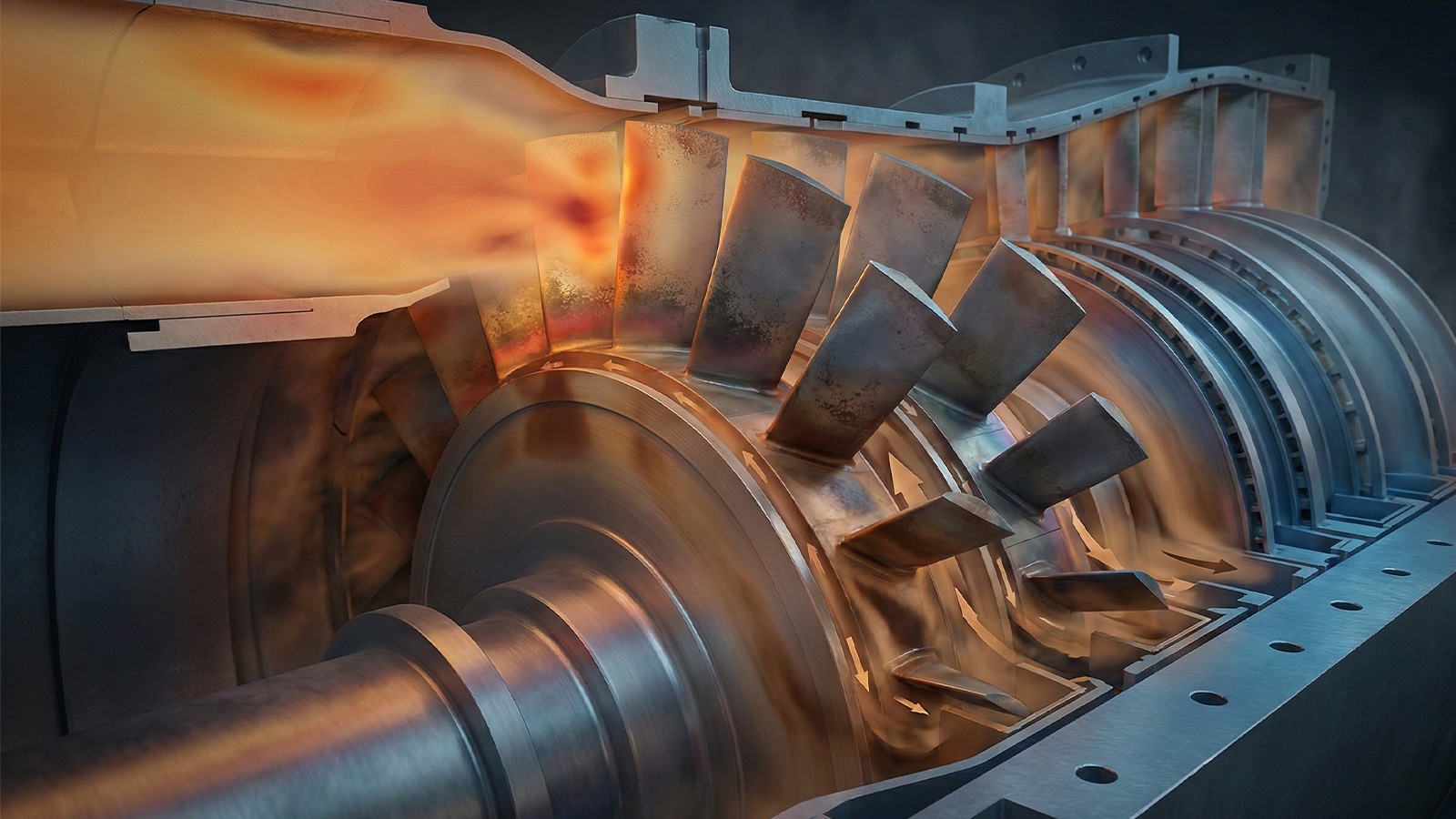
During combustion, exhaust gas flows through the turbine at extreme temperatures and high flow rates. Rim seals at wheel-spaces use coolant to prevent hot gas from seeping between discs and casings. Research funded by EPSRC (grant EP/G096107/1) used infrared technology to measure surface temperatures and enhance rim seal design. Siemens now applies this data to refine secondary air system designs, ensuring rotor blades’ safety under real-world conditions.
Primary Causes of Overheating in Turbine Components
What drives a turbine beyond its thermal limits? A few key factors are at play. Understanding these can help identify issues early on. Let’s explore each one.
Cooling System Failures and Insufficient Flow Rate
A malfunctioning cooling system quickly impairs the ability to cool critical areas. This includes blade roots, rims, and discs. Without enough airflow, exhaust gas temperatures skyrocket. Inadequate sealing air at the turbine rim can cause overheating in mere minutes.
Combustion Instability and Exhaust Gas Temperature Spikes
Uneven air-fuel ratios in combustion chambers lead to hot spots. These spikes can exceed safe temperatures, stressing the blade surface. If not addressed, they can warp entire rotor sections.
Fuel Quality Issues and Their Impact on Gas Temperatures
Different fuels burn differently, affecting combustion quality. Incomplete combustion raises exhaust gas temperatures and deposits oxides on blades. Aviation kerosene, for instance, forms various oxides that accumulate over time. Look out for:
- Unexpected increases in fuel consumption
- Sudden changes in power output
- Unusual emission profiles suggesting miscombustion
Ingestion of Hot Gas Into Wheel-Spaces
Hot mainstream gas can enter wheel-spaces between discs and casings. Designers face a challenge in balancing cooling without sacrificing efficiency. Too much sealing air increases fuel consumption and CO₂ emissions. Too little risks thermal damage. Research from the University of Bath highlights the need for precise coolant flow rates to prevent damage without compromising performance.

Consequences of Thermal Stress on Blade Material and Performance
When a turbine blade overheats, the damage is not just superficial. It’s a threat to the structure, your wallet, and safety. Think of thermal stress as a silent killer inside your engine. It weakens the blade material, drains your finances, and shortens the lifespan of your engine.
Creep Deformation and Metallurgical Degradation at High Temperature
Creep is a significant risk at high temperatures. It causes the blade material to slowly deform, even below its yield strength. Nickel-based superalloys like EI-867 WD are vulnerable to carbide formation, grain growth, and degradation of the γ’ phase. This γ’ phase is critical for resisting creep — losing it puts your engine at risk.
Impact on Blade Surface Coatings and Oxidation
Protective coatings are essential for turbine blades to withstand extreme heat. When components overheat, these coatings undergo chemical and morphological changes. The oxide layers change composition, surface roughness increases, and the coating’s protective ability decreases. Once the barrier is breached, the metal is exposed to corrosive hot gases.
Reduced Reliability and Component Lifespan
Excessive temperatures significantly reduce component lifespan and system reliability. This leads to:
- More frequent unplanned shutdowns
- Accelerated thermal fatigue cracking
- Shortened intervals between major overhauls
- Increased safety risks for plant personnel
Increased Fuel Consumption and Operating Costs
Degraded blades lead to reduced thermodynamic cycle efficiency. Your engine works harder, burns more fuel, and delivers less power. Here’s a quick snapshot of how these costs stack up:
| Consequence | Typical Impact | Cost Implication |
|---|---|---|
| Creep deformation | Blade tip clearance loss | 1–3% efficiency drop per stage |
| Coating degradation | Accelerated oxidation | 30–50% shorter coating life |
| Thermal fatigue cracking | Early blade replacement | $50K–$150K per blade set |
| Unplanned downtime | Lost production hours | $10K–$50K per hour offline |
Conclusion
Overheating poses a significant threat to gas turbine rotors, causing damage from creep deformation to coating breakdown. It also leads to increased fuel costs and shorter lifespans, affecting engine performance. The critical lesson is that balancing cooling air with efficiency is not just beneficial—it’s necessary for rotor safety and reliability.
Implementing proactive measures can mitigate these risks. Achieving stable combustion through precise fuel-air ratios, upgrading cooling systems, and conducting regular inspections are key. Thermal imaging detects hidden hot spots, while performance monitoring tracks temperature trends. Visual inspections uncover early signs of wear, and advanced assessments of blade materials provide insights without disassembly.
Recent research into rotor metal temperature under real engine conditions is revolutionizing secondary air system design. This data empowers companies to refine their design methods, giving them a competitive advantage. Allied Power Group, based in Houston, Texas, applies this expertise to every repair project. They help operators safeguard their equipment, minimize downtime, and optimize turbine performance.