

Your Power Partner
Power Plant Equipment Failure Modes That Lead to Early-Year Forced Outages
At Allied Power Group, we’ve watched seemingly healthy power plant equipment fail without warning—costing operators millions in emergency repairs and lost production.
The worst part? Most of these failures were completely preventable.
Allianz insurance data confirms what we see in the field: operational and handling issues cause the majority of equipment failures in power generation facilities. But here’s what surprises most plant managers—extending your overhaul intervals might actually be setting you up for catastrophic failure, even when your turbines are barely running.
Your generator doesn’t care that budgets are tight. It doesn’t care that you’re scheduled for an outage next month. When critical components fail, they fail on their own timeline, not yours.
Here’s what most operators miss until it’s too late…
Key Takeaways
- Operational and handling issues represent the primary failure mechanisms in power generation facilities according to Allianz insurance data
- Peaking turbines operating fewer hours annually can extend maintenance intervals but require careful condition monitoring to prevent unexpected outage events
- Fortum TGS tracks 100 distinct failure modes with four-level risk assessment systems for improved equipment reliability
- Two-pole generators experience mainly rotor failures while four-pole units face stator-related degradation due to higher centrifugal loads
- Generator overhauls consist of 90% diagnostics and only 10% reconditioning, highlighting the importance of predictive maintenance
- Spring and fall scheduled maintenance windows align with soft power market demand for minimal operational impact
Understanding Critical Failure Modes in Power Plant Equipment
Power plant equipment faces various modes of failure, leading to unexpected shutdowns and costly repairs. Understanding these failure patterns is key to avoiding downtime. Every plant operator should know the critical aspects of equipment reliability.
Foreign Object Damage and Catastrophic Equipment Failure
Foreign objects entering rotating equipment can cause dramatic failures. Fan bolts corroding and breaking loose can fly into generator windings, destroying insulation and leading to complete failure. Balance weights can dislodge from rotors, damaging stator cores beyond repair.
Regular visual inspection of fan blades, balance weights, and securing hardware is essential. Ultrasonic testing on critical components can identify early signs of stress fractures. Always perform a final crawl-through check after maintenance to avoid leaving tools behind.
The Role of Degradation in Equipment Reliability
Equipment degradation follows predictable patterns. Material aging, operational stress, and environmental factors shorten equipment life. Rotor winding distortion develops gradually, creating shorted turns due to inadequate support design or missing slip planes.
Your CMMS should track degradation patterns through real-time data collection. Infrared scanning reveals hot spots before failure occurs. Vibration analysis catches mechanical issues early. This data-driven approach transforms preventive maintenance into science.
Impact of Early Detection on Preventing Forced Outages
Early detection significantly reduces the failure rate. Facilities using continuous improvement methods catch 85% of failure conditions before shutdowns. Visual inspection is your first line of defense, spotting impending failure signs that automated systems might miss.
| Detection Method | Likely Failure Types | Success Rate |
|---|---|---|
| Infrared Thermography | Electrical connections, bearing issues | 92% |
| Vibration Analysis | Misalignment, imbalance | 88% |
| Oil Analysis | Bearing wear, contamination | 76% |
Components prone to failure need special attention during inspections. Root cause analysis of past failures guides your inspection focus. Major causes often trace back to overlooked warning signs that proper monitoring would have caught weeks earlier.
Electrical Equipment Failures and Insulation Breakdown
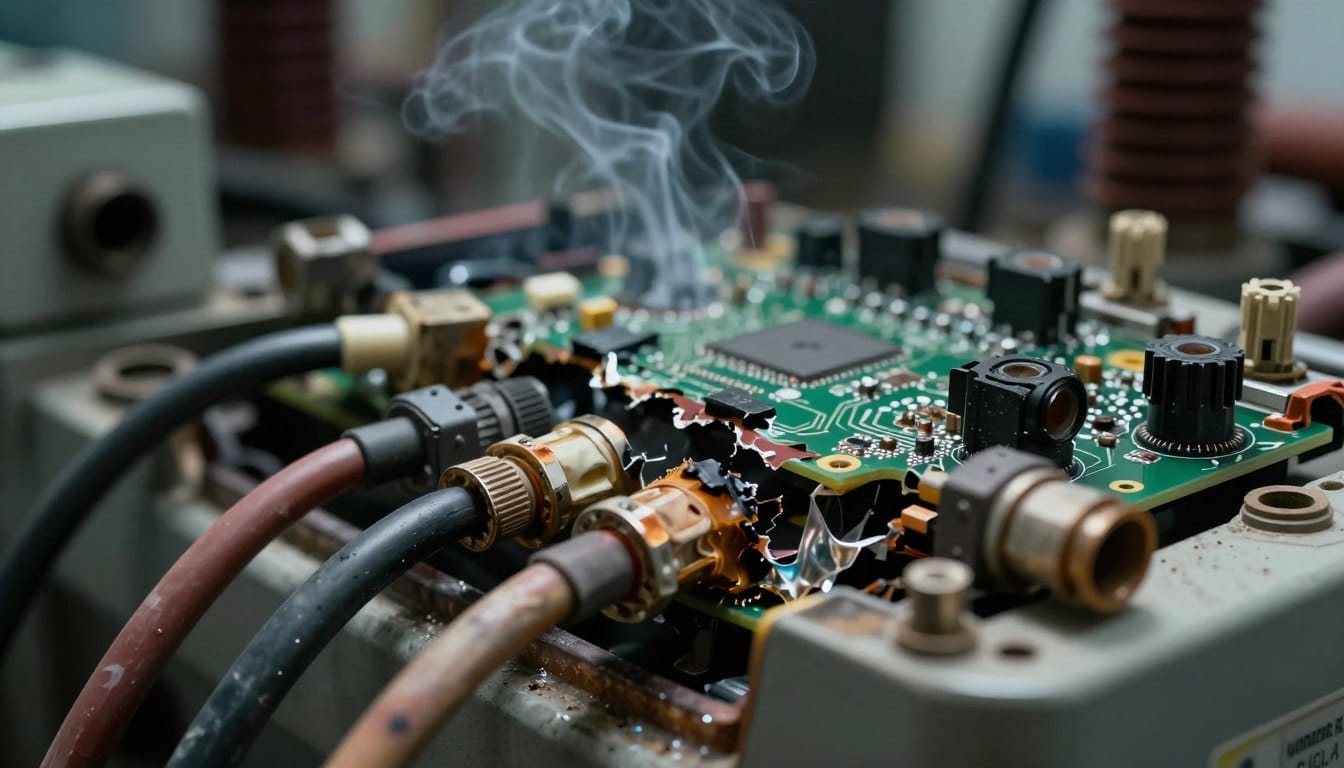
Your electrical equipment faces constant threats that can trigger catastrophic failures in power systems. I’ve seen firsthand how insulation breakdown starts small but rapidly escalates into major outages. The key is catching these issues before they force your units offline. Let’s dive into the specific failure modes that plague generators and transformers every day.
Partial Discharge and Corona Effects in Generators
That white powder dusting your stator windings isn’t harmless residue. It’s evidence of partial discharge eating away at your insulation. Without proper seal protection, this deterioration will accelerate until you’re dealing with full electrical grounds. Smart operators install sensor technology under wedges to track discharge levels in real-time through computerized maintenance management systems.
Dissolved Gas and Arc Formation
Transformer failure rarely happens without warning. Dissolved gas analysis acts as your early warning system, detecting arc formation before catastrophic rupture occurs. Due to environmental factors and contamination, gas concentrations shift predictably. Track these four critical indicators:
- Hydrogen levels indicating overload conditions
- Methane showing thermal stress
- Ethane revealing hot spots
- Acetylene signaling active arcing
Power Factor Testing and Bushing Health
Poor power factor readings tell you moisture has invaded your bushing systems. This premature aging happens when improper lubricant application compromises maintenance and reliability. Corrosion follows quickly, exposing retaining rings to chlorides.
| Test Method | Detection Capability | Response Time |
|---|---|---|
| Power Factor Analysis | Moisture ingress | 24-48 hours |
| Infrared Scanning | Hot spots | Immediate |
| Gas Chromatography | Internal faults | 4-6 hours |
Mechanical Stress and Rotating Equipment Challenges
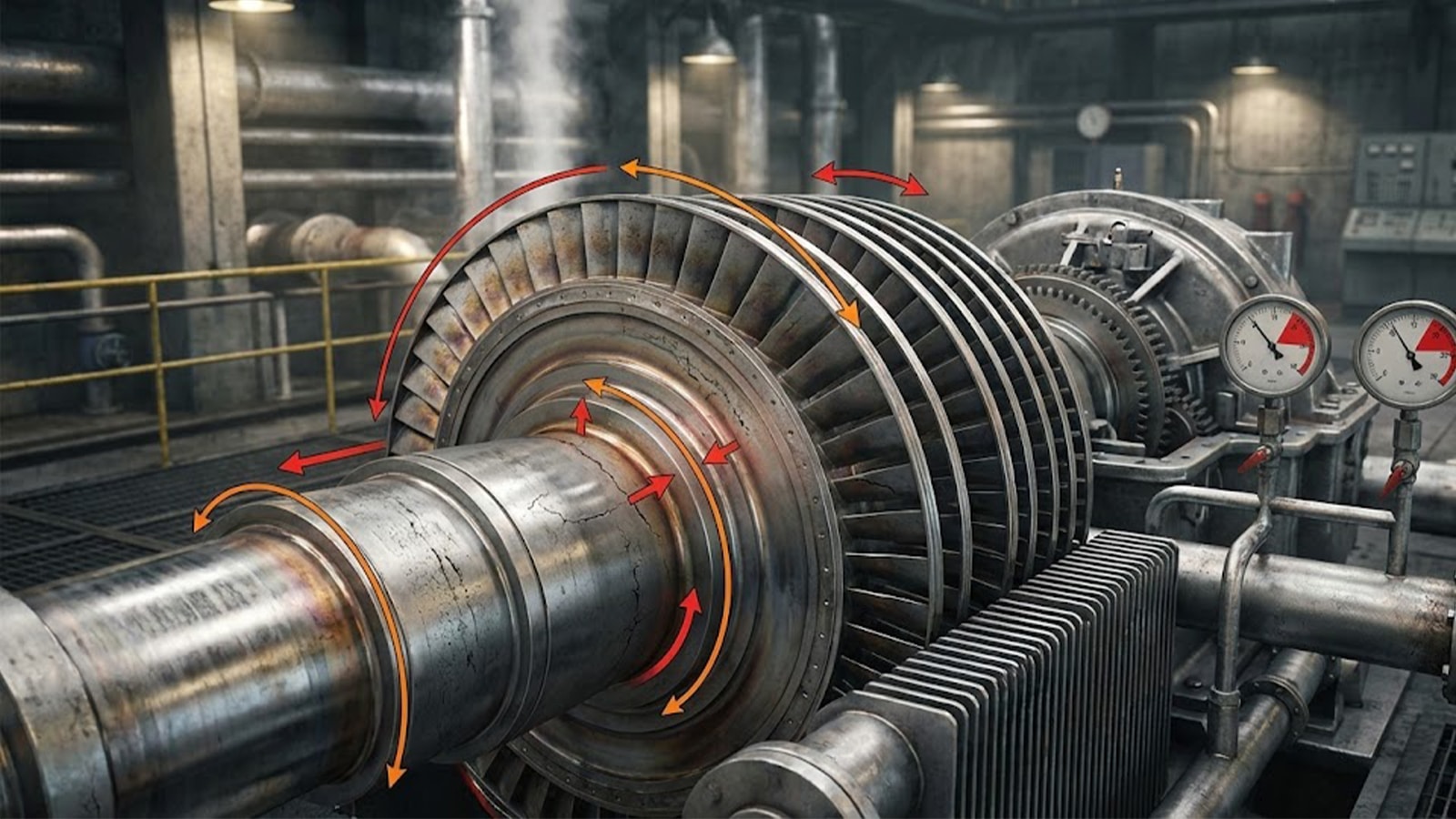
Rotating equipment is vital to power plants, yet mechanical stress poses significant challenges. This stress leads to system failures. Each piece of equipment faces unique stressors, affecting reliability and mean time between failures. Understanding these failure mechanisms is key to developing effective maintenance strategies for long-term success.
Pumps, turbines, fans, and compressors endure various mechanical stresses during operation. Vibration from improper mounting causes excessive wear. Misalignment issues add strain on bearings and shafts. These issues often start small but escalate into major problems without proper preventive maintenance.
| Equipment Type | Primary Stress Factors | Typical Failure Points |
|---|---|---|
| Turbines | High-frequency vibration, thermal stress | Rotor teeth, blade bases |
| Pumps | Lack of lubrication, misalignment | Bearings, seals, shafts |
| Compressors | Cyclic loading, due to heat expansion | Valves, pistons, rings |
| Generators | Electromagnetic forces, thermal cycling | Stator windings, rotor bars |
Equipment can fail early without condition-based monitoring and automation. Failure may stem from low-cycle fatigue in rotor components or high-cycle fatigue in fan blade bases. Thermal stress exacerbates these issues, worsening when ventilation is blocked and overheating occurs. Smart maintenance tasks now use real-time monitoring to prevent catastrophic damage.
Root Cause Analysis of Common Failure Mechanisms
Understanding the root causes of equipment reliability issues is essential. Through systematic root cause analysis, we can uncover patterns leading to major downtime. I’ve identified key failure mechanisms that significantly impact power plant operations over the years.
Contamination and Its Effect on Equipment Life
Contamination is a major cause of premature failure in power generation equipment. Dirty oil or chemical intrusion can reduce hydrogen purity, causing unexpected trips. In air-cooled machines, dust accumulation leads to electrical grounds, resulting in costly downtime.
Contaminants can also degrade lubrication systems, causing wear on rotating surfaces. This increases friction and heat, damaging seal components. Regular condition monitoring, such as Polarization Index tests, helps detect rotor winding cleanliness levels before failure.
Misalignment and Bearing Failure in Industrial Equipment
Poor installation practices lead to a series of problems. Misalignment stresses bearings, while incorrect belt tension accelerates deterioration. These issues often arise from neglecting manufacturer specifications during setup.
Vibration monitoring acts as an early warning system for alignment issues. Bump tests show stator windings near 120-Hz resonance are prone to problems. Implementing condition-based maintenance strategies can prevent bearing failure.
Overload Conditions Leading to Premature Failure
Operating equipment beyond its design capacity reduces reliability. Motors under excessive torque overheat and may stall. Running at incorrect speeds or voltages causes thermal stress, weakening components over time.
Thermal Stress and High-Frequency Vibration Impacts
Heat and high-frequency vibration accelerate corrosion and metal fatigue. Poor lubricant quality increases friction, generating excessive heat that breaks down protective coatings. This cycle of thermal stress makes even minor vibration issues major concerns requiring immediate attention.
How Allied Power Group Helps With Turbine Life Extension
Allied Power Group leads in industrial gas turbine repair. We blend extensive experience with advanced technology to enhance equipment longevity and power system performance. Our strategy involves grasping each turbine’s specific operational hurdles. We then apply focused maintenance plans to avert expensive breakdowns.
Our predictive maintenance programs revolutionize asset management for facilities. We use condition monitoring systems to monitor vibration, temperature, and partial discharge in real-time. This proactive method shifts maintenance from reactive to preventive, ensuring turbines operate longer with reduced downtime.
| Service Category | Inspection Methods | Benefits |
|---|---|---|
| Visual Inspection | Borescope examination, surface assessment | Early crack detection, wear pattern analysis |
| Advanced Diagnostics | Ultrasonic testing, eddy current analysis | Internal flaw identification, material integrity verification |
| Condition Monitoring | Vibration analysis, thermal imaging | Trend tracking, failure prediction |
| Life Assessment | Rotor flux monitoring, stress analysis | Extended equipment reliability, optimized replacement timing |
Our commitment to asset management drives our continuous improvement. We conduct Major Overhauls at 60,000 hours and Life Assessments at 160,000 hours. These milestones meet your operational needs, extending equipment life. Our automation tools simplify maintenance and reliability, ensuring your facility’s peak efficiency throughout each turbine’s life.
Conclusion
Power plant equipment failure is more than a technical issue; it’s a financial disaster that keeps plant managers up at night. We’ve seen how failures in generators, transformers, and rotating equipment can lead to costly outages. The silver lining? You can prevent these issues by adopting smart maintenance strategies. These strategies include early detection and root cause analysis, effectively safeguarding your critical assets.
Viewing your power systems as a high-performance race car is apt. You wouldn’t wait for the engine to fail before checking the oil. The same principle applies to industrial equipment. Moving from time-based maintenance to predictive maintenance allows you to identify problems early. Tools like ElCID testing, dissolved gas analysis, and infrared thermography offer insights into your equipment’s health. Spotting issues early means you can plan repairs during scheduled downtime, avoiding costly emergencies.
Asset management in power plants has moved beyond simple reactive maintenance. Today, it combines preventive maintenance with real-time monitoring to extend equipment life and reduce downtime. Whether facing contamination, misalignment, or thermal stress, the key to reliability lies in continuous improvement of maintenance programs. Companies like Allied Power Group have shown that generators can last over 160,000 hours with the right approach and tools.
Your power plant’s reliability depends on understanding and preventing the 100+ failure mechanisms in generators. You don’t need to become an expert overnight. Begin with regular inspections, quality lubrication, and controlling contamination. Then, move to condition monitoring and seek specialist help when needed. Each failure prevented saves money and protects your reputation in an industry where uptime is success.
FAQ
Q: What are the most common causes of equipment failure in power plants?
A: Contamination causes premature degradation in rotating machinery, while misalignment creates excessive bearing stress leading to early failure. Foreign object damage, thermal stress, and partial discharge represent additional common causes that trigger unexpected shutdowns in power generation equipment.
Q: How does contamination affect power plant machinery?
A: Contamination reduces hydrogen purity in generators, creates electrical grounds in air-cooled equipment, and accelerates wear on rotating surfaces. Dirty oil and chemical intrusion rank among the primary causes of equipment failure that condition monitoring can detect before catastrophic damage occurs.
Q: What early failure warning signs should plant operators monitor?
A: White powder on stator windings indicates partial discharge activity, while abnormal vibration patterns signal misalignment in rotating machinery. These early failure indicators allow operators to address common causes before forced outages occur.
Q: Can predictive maintenance prevent most causes of equipment failure?
A: Predictive maintenance detects 85% of failure conditions before they cause shutdowns in power plant machinery. Real-time monitoring identifies contamination, thermal stress, and degradation patterns that lead to early failure when left unchecked.
Q: What inspection methods detect the common causes of turbine failure?
A: Infrared thermography detects electrical connection issues in machinery with 92% accuracy, while vibration analysis identifies misalignment and imbalance problems. These inspection methods reveal the common causes of early failure including foreign object damage, bearing wear, and insulation breakdown.