

Your Power Partner
5 Borescope Tips to Catch Hidden Turbine Damage

Gas and steam turbines power the backbone of industrial production and energy generation. Yet despite their massive size, the smallest defects—hairline cracks, coating loss, or early-stage thermal fatigue—can trigger costly, catastrophic failures.
The real danger rarely starts with something obvious; it starts with something invisible, often hidden beyond the reach of a standard visual inspection.
This is where borescope inspections become essential. They allow engineers to inspect internal turbine components without disassembly, reducing downtime and component repair expense.
By using a borescope, technicians gain access to internal pathways and surfaces traditional methods can’t reach. However, many inspections fail to catch early distress signs—not because the damage isn’t there, but because the team lacks the right tools, technique, or experience to interpret what the borescope camera reveals.
At Allied Power Group, we’ve seen that the difference between a controlled outage and a costly crisis comes down to what your inspection captures—or misses.
This article shares five expert tips to help identify hidden turbine issues before they become expensive problems.
Key Takeaways
- Borescope inspections reveal hidden turbine damage before costly failures occur.
- The right inspection equipment dramatically improves accuracy and repair decisions.
- Structured sweep patterns reduce missed defects in hard-to-reach areas.
- Proper image documentation strengthens repair validation and budget control.
- Combining borescope findings with operational data ensures optimal turbine performance.
Why Borescope Inspections Matter in Modern Turbine Maintenance
Turbine reliability is no longer optional—not when outages can cost hundreds of thousands of dollars per day and OEM repair recommendations can swing project budgets wildly. Borescope inspections serve one primary purpose: verify the actual condition of your turbine rather than relying on assumptions or OEM-driven repair cycles.
But the stakes are even higher than verifying condition. A precision borescope inspection allows your team to:
- Detect minor defects before they spread into catastrophic failure
- Validate OEM and contractor work scopes
- Make repair decisions based on physical evidence—not vendor pressure
- Map the true lifecycle of hot gas path components
- Minimize unnecessary downtime during inspections
Hidden damage issues frequently begin long before operators notice performance loss. Heat distortion, coating erosion, or FOD impact marks may progress silently until a sudden failure halts operations. With the right strategy and adherence to best practices, you can intercept these risks early—long before someone tries to justify a seven-figure parts purchase. This contributes to more predictable budgets and optimal performance throughout the turbine’s lifecycle.
That leads us to our first tip.
Tip #1 — Choose the Right Borescope for Your Turbine Type
Equipment Selection Determines What You See—and What You Miss
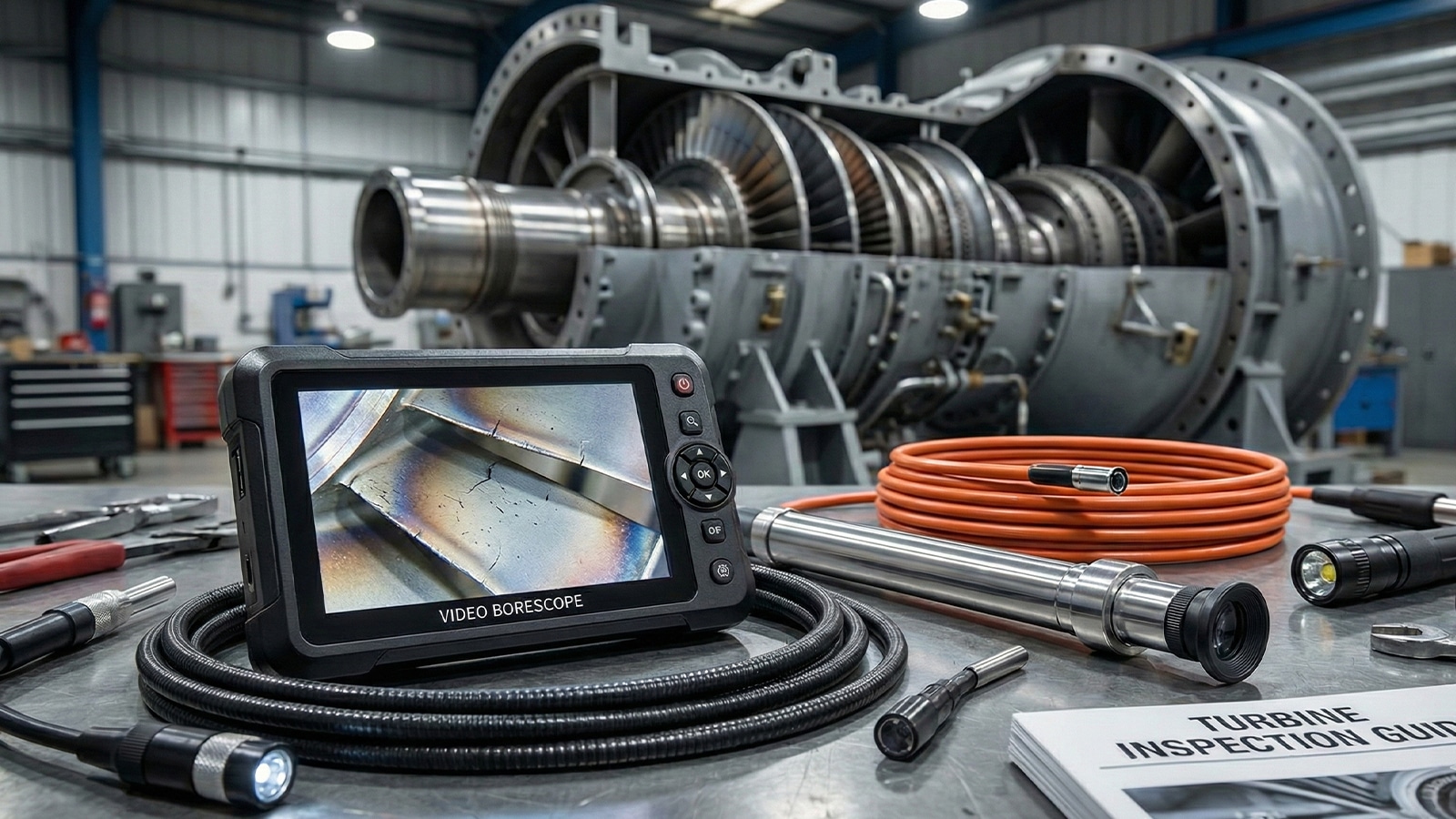
Not all borescopes are created equal. Selecting the wrong one is the fastest way to miss the visual cues that signal deeper turbine trouble. The ideal tool depends on the turbine configuration, access points, and whether you’re working in the hot gas path, compressor, combustion sections, or low-pressure stage. A properly selected borescope camera can access hard-to-reach areas that no other inspection tool can reach.
Rigid, Flexible, and Video Borescopes—What’s the Difference?
| Borescope Type | Best Use Case | Strengths | Limitations |
|---|---|---|---|
| Rigid | Straight-access inspections | Crystal-clear optics | Limited movement |
| Flexible | Curved or obstructed passages | Maneuverability | Can be less stable |
| Video | Full digital inspections | Real-time recording + precise documentation | Requires trained operator |
For industrial turbines, video borescopes are the standard. The ability to broadcast live images, zoom, capture stills, and annotate data makes them an invaluable tool during outages—especially when multiple stakeholders must agree on repair scope.
Resolution and Articulation Matter
A borescope with insufficient resolution produces hazy images that hide cracks, pitting, and early-stage metallurgical fatigue. No amount of operator skill can compensate for poor optics.
The borescope should have:
- High-resolution digital output
- 360-degree articulation
- Small diameter probes to navigate confined paths
- Adjustable LED lighting that eliminates glare and shadow artifacts
When Allied Power Group audits an outage where someone missed a critical finding, there’s almost always one of two culprits:
-
The inspection tool was incapable of identifying the defect, or
-
The tool was capable, but the operator wasn’t trained to use it
Avoiding both pitfalls begins with selecting equipment that aligns with turbine configuration—not what the OEM or contractor prefers.
Tip #2 — Follow a Structured Entry & Sweep Pattern
Technique Prevents Blind Spots and Reduces Missed Damage
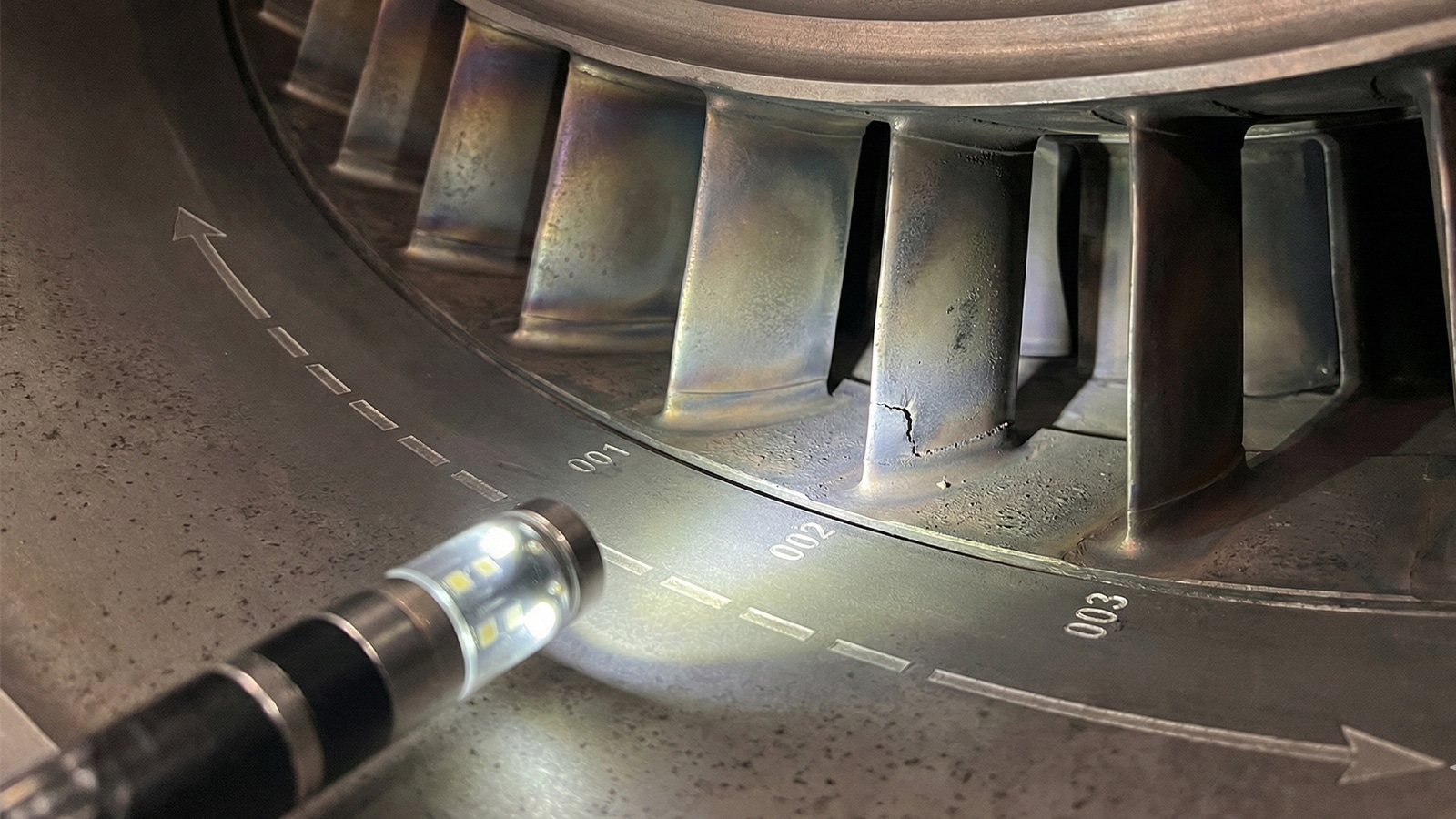
A common misconception is that a borescope inspection is as simple as inserting a probe and taking pictures. In reality, there’s an established science to how you enter, move, and exit each inspection zone. Skipping this process is how blades with cracks “pass inspection.”
The Systematic Sweep
Professional inspectors use a repeatable sequence:
-
Identify access ports that allow unobstructed visibility
-
Insert the borescope at a consistent depth
-
Sweep clockwise or counterclockwise from a fixed reference point
-
Capture images at defined intervals—never randomly
-
Document angles and direction for future comparisons
If you change the sweep pattern every outage, you cannot compare results year to year. This is where turbine owners lose the ability to track progressive wear—and where OEMs sometimes justify repairs without proof.
Why Structure Matters
A disciplined sweep pattern allows engineers to:
- Identify component changes between inspection cycles
- Map damage progression with certainty
- Detect defects hiding along trailing edges, shrouds, and vane transitions
- Reduce rework and duplicate passes
This method transforms your borescope inspection from a visual tour into a measurable dataset—a crucial shift for turbine lifecycle planning.
Tip #3 — Know What Damage Looks Like Before You Look
Damage Patterns Reveal Problems Long Before Failure Occurs
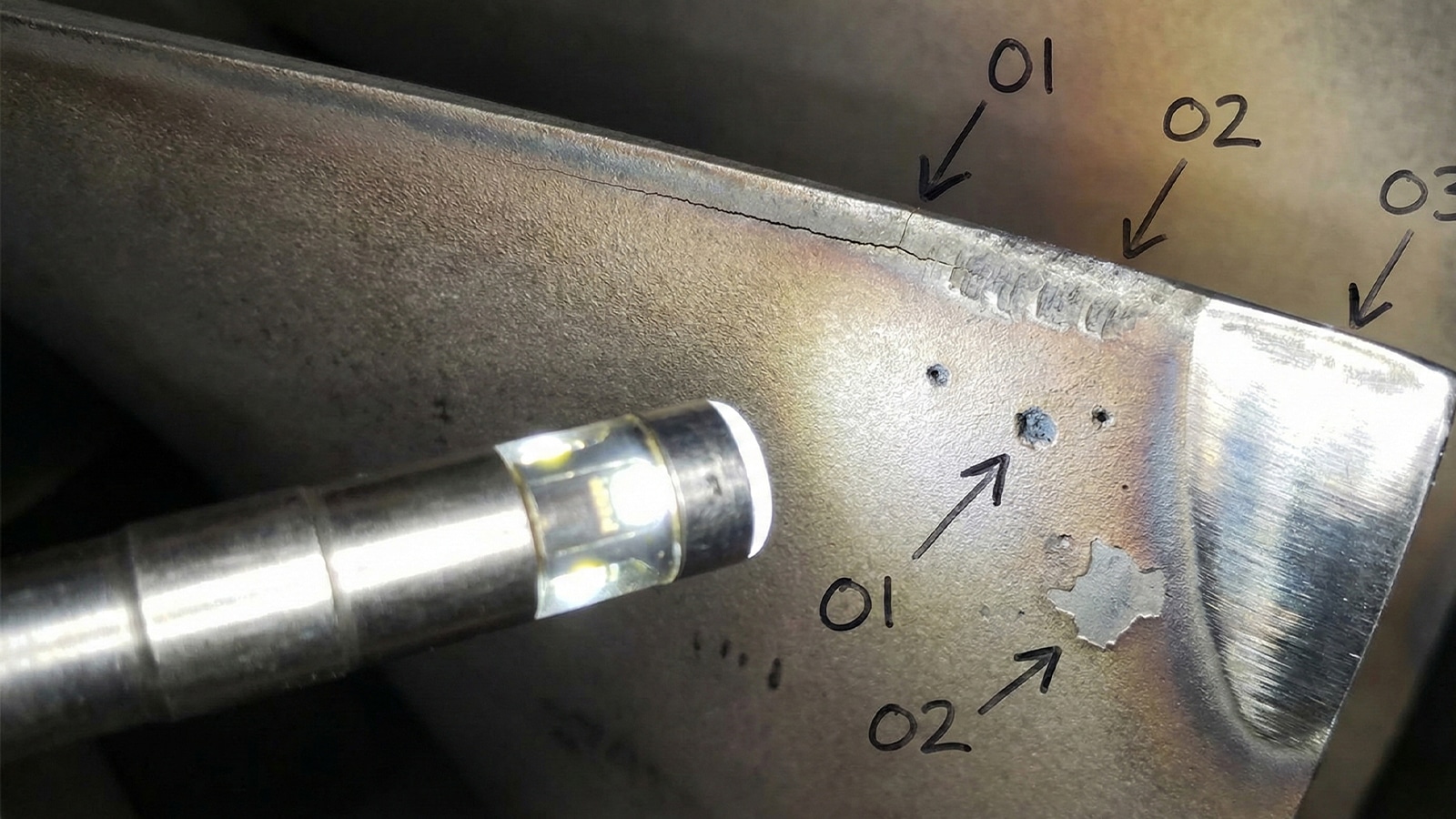
Borescope inspections are not just photo sessions—they’re diagnostic exercises. Knowing how to recognize the subtle differences between harmless discoloration and early-stage component distress is what separates expert inspections from expensive guesswork.
Common Defects to Identify
| Damage Type | What It Indicates |
|---|---|
| Erosion | Combustion gas flow issues or abrasive contaminants |
| Cracking / Fatigue Lines | thermal cycling or vibration stress |
| Pitting | Foreign object damage, corrosion, or coating failure |
| Coating Loss | End-of-life hot gas path coatings |
| Blade Tip Rub | Clearance issues or rotor misalignment |
Each of these clues unlocks a deeper engineering question:
- Is the failure pattern random or directional?
- Is the problem localized or systemic?
- Does the issue match operational data (temperatures, vibration, loading cycles)?
- Is there evidence supporting an OEM-recommended repair—or evidence disproving it?
Why OEMs Sometimes Miss What Matters
OEM inspections often focus on conditions that justify replacement of proprietary parts. Independent inspections, like those offered by Allied Power Group, are not motivated by selling components. We evaluate condition based purely on lifecycle realities—not sales quotas.
Knowing what damage looks like ensures you never approve a repair scope based on fear instead of facts.
Tip #4 — Capture and Classify Images for Data-Driven Decisions
If You Can’t Prove It, You Can’t Control the Budget
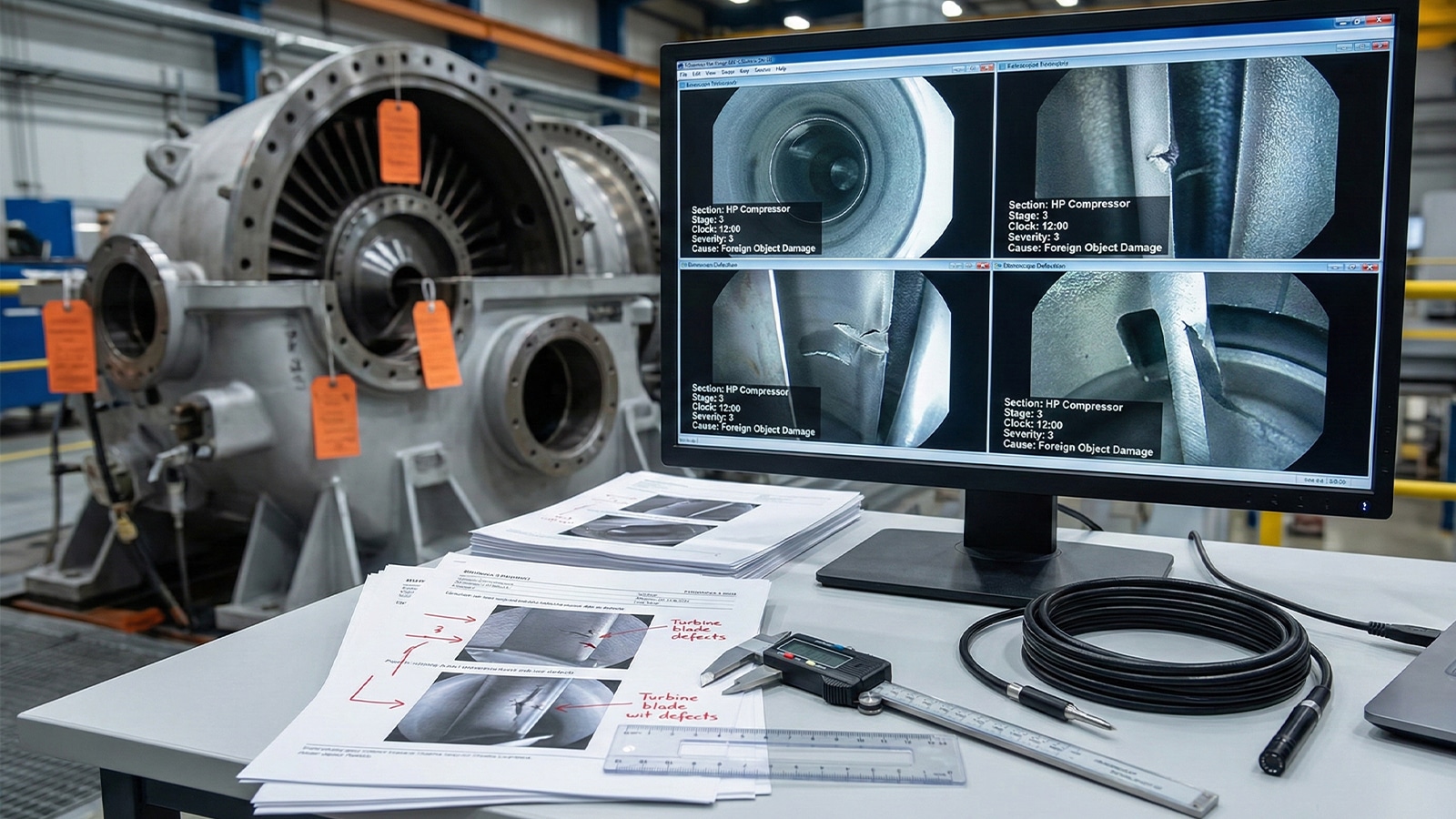
A borescope inspection is only valuable if the information survives the inspection. Grainy screenshots or mislabeled images create confusion. Proper documentation allows turbine owners to support—or challenge—repair proposals confidently.
Capture With Intention
High-quality inspections include:
- Multiple images per component surface
- Full illumination with no reflections masking defects
- Close-range images showing defect dimensions
- Context images showing blade position and stage location
Classification Turns Pictures Into Evidence
Each image should be tagged with:
- Turbine type and section
- Stage and row number
- Clock position reference (e.g., 2 o’clock trailing edge)
- Severity class (slight / moderate / critical)
- Notes on suspected cause
This transforms inspection outputs into a dataset rather than a folder full of mystery images.
Why Documentation Protects the Owner
With complete image logs, project owners can:
- Confirm whether a damaged component changed since last outage
- Disprove claims that a part is at end-of-life when data says otherwise
- Negotiate pricing with OEMs based on documented condition
- Avoid unnecessary scope additions or expensive schedule delays
Every turbine owner who has ever been surprised by an unexpected repair invoice shares a common trait—they didn’t have indisputable inspection evidence to push back.
Tip #5 — Combine Borescope Findings With Operational Data
Visual Evidence Without Context Can Lead to False Conclusions
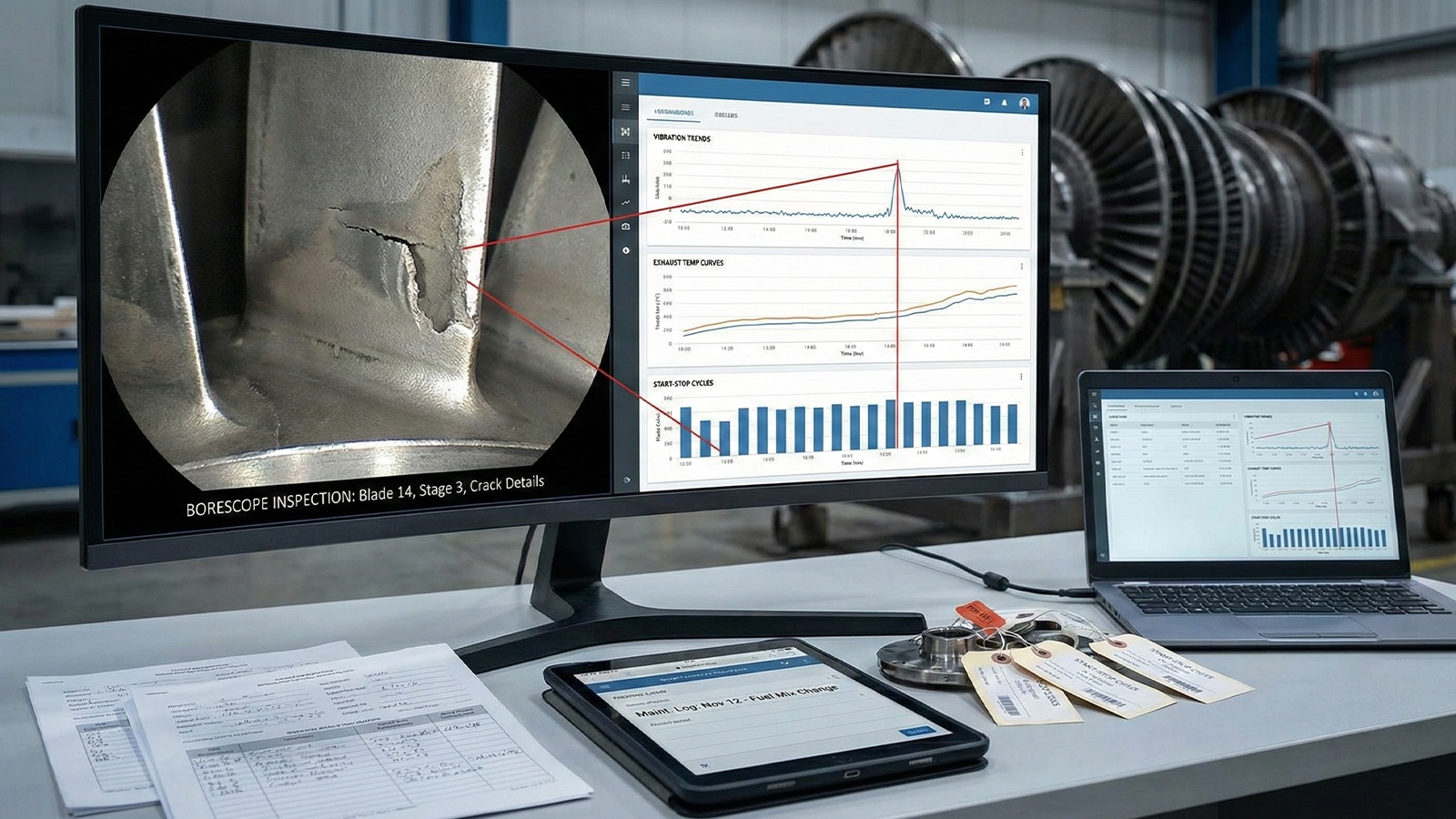
A borescope shows what happened, but not why. True insight emerges when borescope findings are correlated with operational history. A blade crack means one thing if the unit recently experienced load shedding, and something entirely different if exhaust temperatures have been creeping up for 18 months.
Data That Strengthens Diagnosis
- Vibration trends
- Exhaust temperature profiles
- Start-stop cycles
- Fuel changes or contamination alerts
- Historical repair data
- Operating mode shifts (baseload vs peaker duty)
When these data streams align, the operator gains something priceless: clarity.
This is the moment when an owner can determine whether a problem is:
- A cosmetic anomaly
- A progressive mechanism requiring monitoring
- Or a confirmed failure point that demands action now
At Allied Power Group, we’ve saved clients millions of dollars by proving that conditions flagged as “critical” were actually stable, predictable, and within tolerance—once correlated with operational data.
This is where real value is created.
Common Mistakes That Lead to Missed Turbine Damage
Most turbine damage that surprises plant operators was not invisible—it was ignored, misunderstood, or never reviewed in context. The following errors create unnecessary risk:
- Relying solely on OEM inspection reports
- Using outdated or underpowered borescopes
- Skipping or rushing hard-to-reach inspection zones
- Failing to document angle, stage, or depth of inspection photographs
- Interpreting damage without correlating operational data
These mistakes represent not just oversight—but opportunity. The operators who avoid them operate safer, smarter, and more profitably.
Final Takeaway — Borescope Mastery Protects Your Outage Budget and Turbine Health
Turbine failures do not begin with explosions or alarms. They begin as small, avoidable defects—ones that a trained expert with the right equipment, inspection plan, and data discipline can catch early.
Mastering borescope inspections gives turbine owners three strategic advantages:
-
Control over repair scope rather than accepting vendor recommendations blindly
-
Proof-based maintenance planning that aligns with component lifecycle, not replacement cycles
-
Massive savings by eliminating unnecessary repairs and preventing catastrophic failures
At Allied Power Group, we partner with facility owners, plant engineers, and outage directors to turn borescope inspections into leverage—not liabilities. We don’t sell parts. We safeguard your asset’s long-term health, lifecycle value, and operating performance.
If you’re preparing for a turbine inspection, considering repair scope validation, or seeking a second opinion before authorizing major spend, our team can help ensure your decisions are driven by evidence—not assumptions.
Ready to See What Your Turbine Is Really Telling You?
Request a consultation with Allied Power Group, and we’ll help you turn borescope insights into measurable savings, predictable performance, and a turbine that operates on your timeline—not someone else’s.
Your turbine has a story. We’ll help you read it before it becomes a headline.
Frequently Asked Questions
What role do advanced borescopes play in a turbine inspection?
Advanced borescopes allow technicians to reach internal turbine components without disassembly. By using an inspection camera that provides high-resolution imaging, engineers can evaluate conditions accurately and spot early damage. This capability reduces the risk of undetected defects and helps prevent costly failures during operation.
Why is it important to inspect turbine blades during an outage?
When technicians inspect turbine blades during an outage, they can identify coating loss, cracking, pitting, and other early warning signs. Detecting these conditions with the right inspection equipment reduces the risk of catastrophic failure later and helps prevent unnecessary downtime or emergency repair spending.
How do best practices improve the results of a turbine inspection?
Following best practices ensures technicians capture consistent, reliable images and review all critical areas, not just obvious surfaces. Using a modern inspection camera and appropriate inspection equipment increases precision, reduces the risk of missed defects, and helps prevent operational delays caused by avoidable issues.
What should operators look for when using advanced borescopes to inspect turbines?
Operators using advanced borescopes should look for evidence of erosion, fatigue lines, coating loss, and debris that may affect turbine blades or airflow paths. A high-quality inspection camera makes it easier to capture those details, which reduces the risk of misdiagnosis and helps prevent unexpected failures.
How does inspection equipment influence the accuracy of a turbine inspection?
Choosing the right inspection equipment—including an articulated inspection camera with proper lighting and resolution—ensures clearer visibility inside the turbine. This level of clarity reduces the risk of missing hidden damage and helps prevent incorrect repair decisions, especially when evaluating turbine blades.