

Your Power Partner
7FA Shrouds, Seals & Hardware: Why Small Component Failures Cause Catastrophic Turbine Downtime
If your GE 7FA gas turbine is showing rising exhaust temperatures, compressor efficiency loss, or flagged borescope findings, the culprits are most likely the smallest components in the hot section — and the ones with the least margin for error. 7FA shrouds, seals, and hardware operate at tolerances measured in thousandths of an inch, inside a thermal environment that punishes every deviation.
Allied Power Group’s gas turbine component repairs practice is built around exactly this work. For power generation facilities weighing their options right now, the question is not whether to act — it is whether to act correctly the first time or pay to fix it twice.
Key Takeaways
- Degraded 7FA shroud clearances accelerate hot gas path erosion exponentially with every fired hour
- Honeycomb seal field repairs using generic materials risk seal liberation and hot section events exceeding $500,000
- Hardware failures invisible to visual inspection require fluorescent penetrant or eddy current testing to catch
- Improper torque sequencing on combustor hardware is a documented cause of emergency shutdowns
- Undocumented in-house repairs create insurance and liability exposure that persists through ownership changes
Why 7FA Shrouds, Seals, and Hardware Deserve More Attention Than They Get
In a gas turbine the size of a frame 7FA.04 gas unit, attention naturally gravitates toward the heavy iron — turbine blades, the gas turbine rotor, combustion liners. The components that most often determine whether a planned outage stays planned are the ones that do not photograph well in a condition report.
Shroud segments, vanes, honeycomb seals, flow sleeves, hula seals, and transition pieces hold thermal boundaries, maintain clearance geometry, and keep hot gas where it belongs. When any one of them degrades past its tolerance band, the damage it causes is rarely proportional to its size.
The Role Shrouds Play in Hot Section Integrity
7FA shroud segments line the turbine flowpath and control the clearance between rotating blade tips and the stationary casing. That clearance is not a range — it is a precise dimension, and gas leakage through an open tip gap accelerates blade erosion with every fired hour.
When shroud blocks wear or install out of spec, what looks like a manageable heat rate penalty in month one can become full blade tip liberation before the next planned maintenance window.
The 7FA.03 fleet has documented this failure mode: a single major inspection outage analysis identified shroud damage across dozens of stage buckets following fewer than 23,000 operating hours — all traceable to clearance degradation that began as a borescope finding.
What Seals Are Actually Protecting
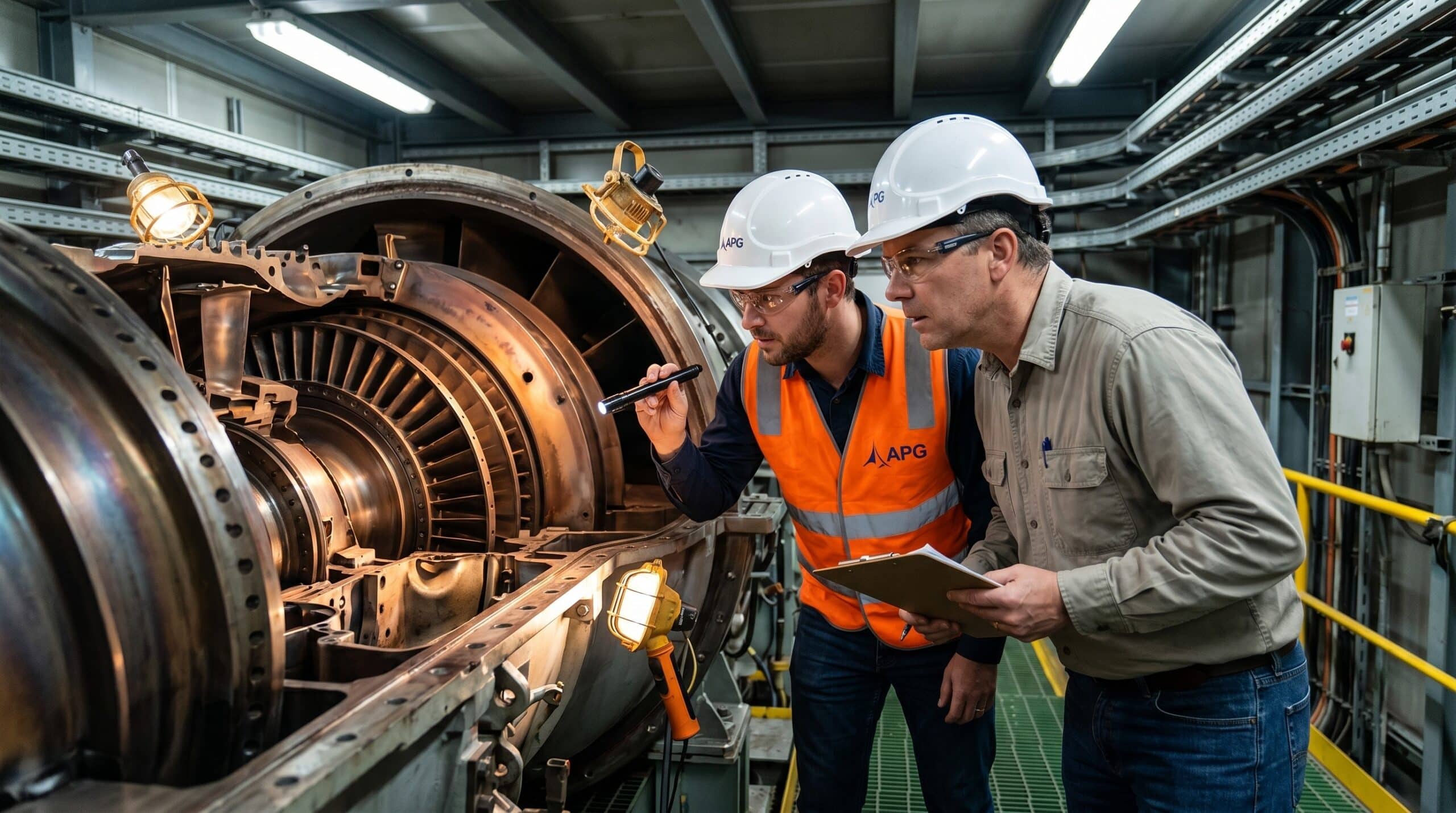
Honeycomb seals and hula seals are active thermal barriers that maintain cooling flow geometry under sustained high-temperature loading. A hula seal in good condition keeps combustion gases out of the cooling cavity between the transition pieces and the first-stage turbine nozzle.
When a hula seal creeps, cracks, or loses contact with its mating surface, hot gas ingestion into the cooling cavity raises metal temperatures beyond design limits — and the creep damage that follows in the structural casing is not repairable. Replacement costs for a creep-damaged casing on a GE 7FA exceed $1 million.
Why In-House Repairs on These Components Carry Disproportionate Risk
Plant teams that have successfully handled compressor section work or liner replacements sometimes assume shroud and seal repairs fall in the same category. They do not. The failure modes are different, the inspection requirements are different, and the consequences of getting it wrong are categorically worse.
Shroud Tolerances Cannot Be Approximated
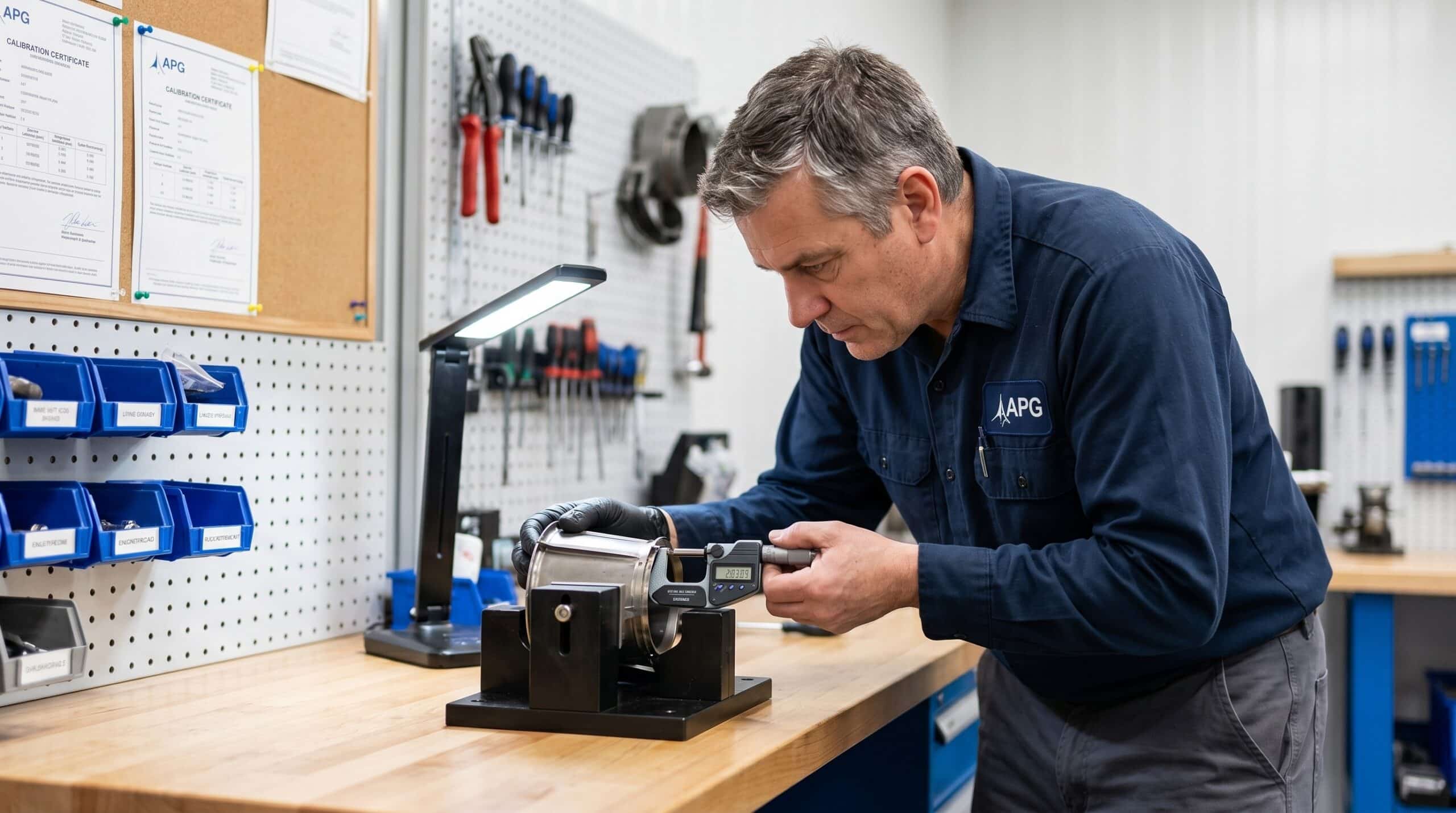
7FA shroud installation requires OEM-grade tooling and documented measurement protocols to achieve tip clearance within spec. Without that tooling, an in-house team is estimating. An estimate that is even a few thousandths of an inch outside the acceptable band installs the machine for accelerated wear from first fire, producing a repeat repair within one to two firing cycles at full cost. A thermal barrier coating applied outside qualified shop conditions introduces alloy-to-coating thermal mismatch that the thermal barrier will resolve at operating temperature — through failure.
Hardware Failures Are Not Visible Without the Right Inspection
Transition piece attachment bolts and hula seal retention hardware are subject to high-cycle fatigue and oxidation damage that does not show under a standard borescope pass. Catching it requires fluorescent penetrant inspection or eddy current testing.
Without those methods, hardware that has already exceeded its fatigue life gets reinstalled and fails mid-operation. Improper torque sequencing on 7FA combustor hardware compounds this risk — it is a documented root cause of combustion dynamics spikes, flame detector failures, and combustion liner destruction. Substituting non-OEM equivalent gas turbine parts also voids applicable service agreements and gives insurance carriers documented grounds to dispute forced outage claims.
Call (281) 444-3535 if your team is holding inspection findings on shrouds, seals, or combustion components and has not yet confirmed what inspection method was used to clear the hardware.
What Getting It Wrong Actually Costs
| Scenario | Estimated Cost | Outage Type | Agreement Impact |
|---|---|---|---|
| Planned shroud overhaul — specialist | $50,000–$150,000 | Scheduled | Fully documented |
| In-house install — repeat failure | $200,000–$500,000 | Unplanned + repeat | Warranty void |
| Failed hula seal — hot section event | $500,000–$1,000,000+ | Emergency forced | Coverage dispute likely |
| Rotor replacement — tip liberation | $1,000,000+ | Extended forced | Total loss scenario |
In the ERCOT market during summer peak, replacement power costs and capacity penalties accumulate daily. The gap between a planned repair and a forced outage is not a budget line — it is the difference between a defined cost and an open-ended one. Every fired hour with a known degraded condition narrows that gap. A major inspection finding flagged as monitor-and-continue on shroud or seal components is not a closed issue — it is a countdown.
Texas regulatory and insurance requirements also mandate traceable quality standards for turbine repairs; undocumented in-house work creates liability exposure that follows the asset through the next ownership transaction and insurance renewal, not just the next outage.
Allied Power Group’s Houston facility handles the full repair process — dimensional inspection, weld repair, thermal barrier coating, and fluorescent penetrant inspection — with documented repair history that protects the plant’s long-term reliability standing. For Gulf Coast operators running combined-cycle units, shortened lead time from a Houston-based shop is a practical advantage when an outage window is already under pressure.
Conclusion
The smaller the component and the tighter the tolerance, the more consequential the repair decision. 7FA shrouds, seals, and hardware are not secondary considerations in a major outage scope — they are the components whose condition determines whether the outage stays planned or becomes a seven-figure emergency. When inspection findings are already in hand, the right move is getting those findings in front of a team that has done this work before.
Allied Power Group is Houston-based, 7FA-experienced, and ready to review your findings now. Call (281) 444-3535 for a no-cost component condition assessment. The team will go through your inspection scope, identify which shrouds, seals, and hardware items represent active risk, and deliver a written repair-versus-replace estimate before you commit to anything.
Frequently Asked Questions
How do I know if my 7FA shroud segments need replacement versus refurbishment?
Tip clearance measurements, segment edge erosion depth, and thermal barrier coating condition determine whether shroud segments qualify for refurbishment or must be replaced with new. Visual inspection alone cannot answer this question — dimensional inspection using OEM-reference tooling is required to make a defensible call. If your last borescope flagged shroud condition without dimensional data to back it up, that gap is itself a reason to bring in a specialist before your next outage.
What makes honeycomb seal repair different from other seal work on the 7FA?
Honeycomb seals require controlled brazing processes and qualified coating systems applied in a shop environment — field repairs using commercially available materials introduce thermal mismatch that causes seal liberation at operating temperature. A seal repair that costs $10,000 when done correctly can cost $500,000 or more to remediate, because a liberated seal at temperature is not a seal problem anymore — it is a hot section event. The repair process matters as much as the materials.
Can improper hardware installation really cause a combustion event?
Improper torque sequencing on 7FA combustor hardware is a documented root cause of combustion dynamics spikes that trigger emergency shutdowns and risk combustion liner destruction. Clamping force distribution across combustor components affects seal geometry in ways that accumulate across operating cycles — the failure does not announce itself immediately, which is why hardware that looks correctly installed can still be a timed problem. This is a failure mode with a paper trail, not a theoretical risk.
What does a no-cost component condition assessment from Allied Power Group actually include?
Allied Power Group’s assessment is a working technical review, not a sales call. A qualified engineer evaluates your inspection findings, borescope images, or outage scope, identifies which components represent active risk versus monitor-and-trend conditions, and delivers a written repair-versus-replace estimate. You get a defensible position on your repair scope before committing budget or scheduling downtime.
Why does repair documentation matter for insurance purposes?
Undocumented in-house turbine repairs create grounds for insurance carriers to dispute forced outage claims under Texas regulatory and most service agreement frameworks. The exposure does not close when the unit returns to service — it stays open through the next renewal cycle and through any ownership transaction where maintenance history is reviewed. Allied Power Group’s documented repair process is specifically structured to protect that standing.