

Your Power Partner
Optimizing GE 7FA Part Load Operations
Running a gas turbine at full capacity is relatively straightforward — push the unit to base load, maintain firing temperature, and let the machine operate within its design envelope.
Part load operation is a different challenge entirely. Think of it like driving a high-performance sports car through a school zone at 25 miles per hour. The engine was engineered for highway speeds, and keeping it stable, clean, and efficient at low power requires careful calibration and continuous attention.
The GE 7FA is one of the most widely deployed F-class heavy duty gas turbines in the world, with hundreds of units operating across combined cycle and peaking power plant applications in the United States and internationally.
When grid dispatch requirements reduce demand and operators must turn the unit down, the combustion system, inlet conditions, and control system logic all face stresses that don’t exist at rated output. Optimizing GE 7FA part load operations isn’t simply about reducing megawatts — it’s about doing so without compromising reliability, NOx emissions compliance, or long-term turbine performance.
This article breaks down the key technical considerations for operators and plant managers working to maximize efficiency and uptime during part load operation.
Key Takeaways
- Part load combustion in the 7FA introduces dynamic pressure, combustion instability, and NOx emissions challenges that require active management
- The DLN-2.6 combustion system has specific turndown boundaries that must be respected to avoid combustor damage and emissions exceedances
- Turbine inlet conditions and compressor variable geometry are pivotal to maintaining combustion stability at reduced loads
- Exhaust temperature profiles shift at part load and directly impact HRSG performance in combined cycle applications
- Proactive combustion tuning and disciplined outage planning are the most effective levers for controlling long-term maintenance costs
How the GE 7FA Gas Turbine Behaves at Part Load
Designed for Base Load, Stressed at Turndown
The GE 7FA was engineered to deliver peak output and efficiency at or near base load. At rated firing temperature, the combustion system, compressor, and hot gas path components operate within their optimal performance envelope.
When the unit turns down — whether driven by market dispatch, combined-cycle optimization, or grid frequency requirements — every subsystem must adapt to operating conditions it was not primarily designed for.
Think of it like a commercial kitchen burner set to its lowest flame. At full heat, combustion is even and clean. At minimum output, the flame flickers, heat distribution becomes uneven, and incomplete combustion becomes a risk.
The same principle applies to the 7FA combustor: reduced air flow and lower firing temperatures shrink the stable operating window and demand more precise fuel management.
The DLN-2.6 Combustion System at Reduced Output
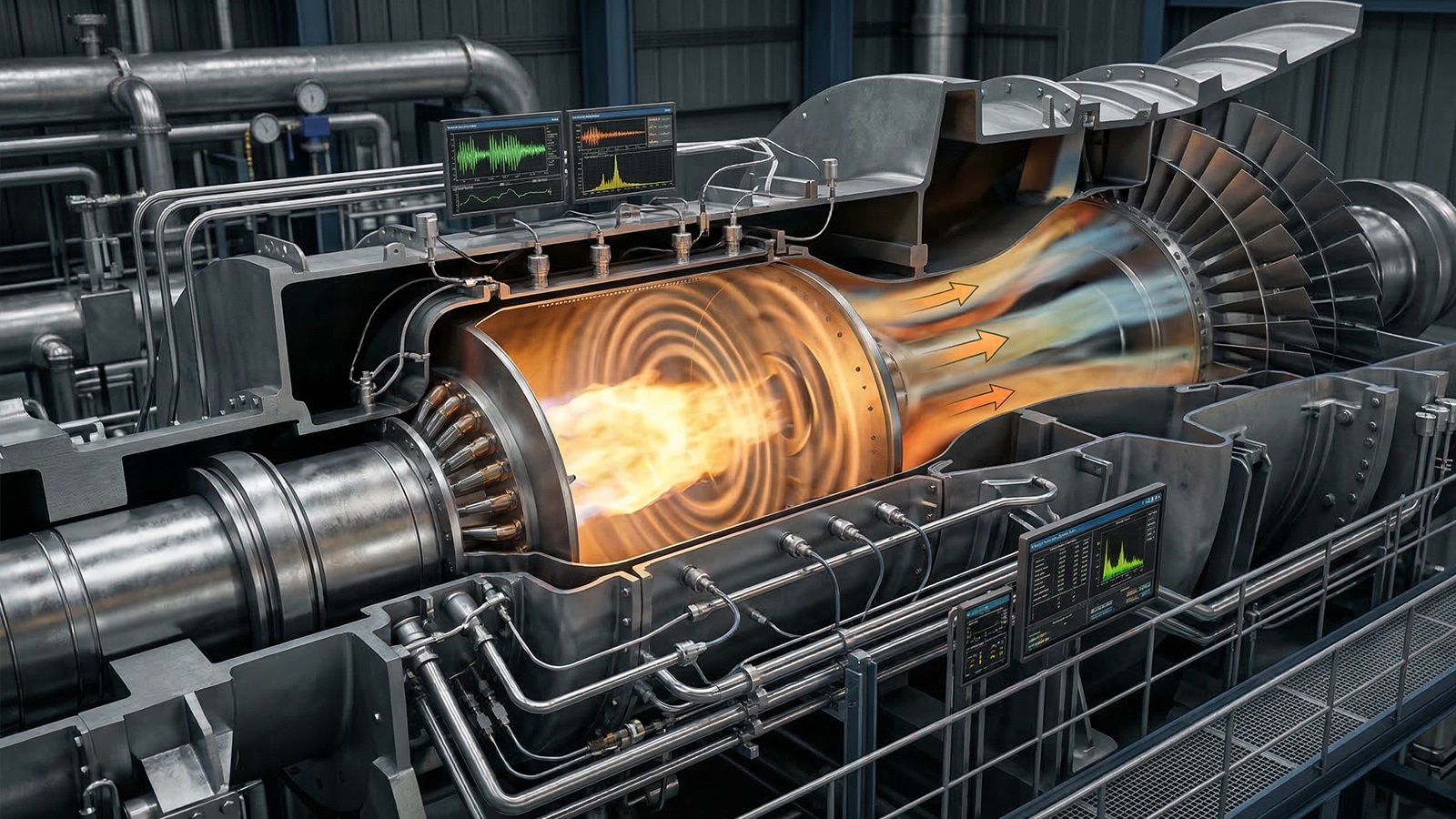
The GE 7FA uses the DLN-2.6 combustion system — a dry low NOx design that uses staged fuel injection across multiple fuel nozzle circuits to manage combustion dynamics and emissions across a wide load range. The DLN-2.6 transitions through several combustion modes as the unit ramps from ignition to base load, and each mode transition is a potential instability point.
At part load, the combustion system must sustain a stable premixed flame without the inlet air volume that supports stability at higher outputs. This makes the combustor more sensitive to ambient temperature variation, natural gas composition shifts, and valve positioning accuracy.
Combustion Stability Challenges During Turndown
Dynamic Pressures and Combustion Dynamics
One of the primary concerns during GE 7FA turndown is the onset of combustion dynamics — pressure oscillations within the combustor that generate mechanical fatigue on combustion hardware. Dynamic pressures increase when the flame loses stability, and they are most pronounced during DLN-2.6 mode transitions.
Operators should monitor for:
- Elevated dynamic pressure readings across the combustor cans
- Uneven exhaust temperature spreads indicating inconsistent combustion across the combustion chamber
- Fuel nozzle circuit imbalances that push individual combustors outside their operating window
- Valve position deviations from tuned setpoints
Ignoring elevated dynamic pressures during part load operation accelerates wear on combustion liners, transition pieces, and the gas path components immediately downstream.
NOx Emissions at Reduced Load
At full output, the DLN combustion system achieves reduced NOx through lean premixed combustion — fuel and inlet air are thoroughly mixed before ignition, keeping flame temperatures and NOx formation in check. At part load, maintaining that lean premix balance becomes harder. The combustion system must operate within tighter margins to stay in compliance while avoiding lean blowout.
The control system governs the fuel split between nozzle circuits. Degraded fuel nozzles, misaligned valve positions, or poor tuning can push the combustor out of its optimal operating window — resulting in both elevated NOx emissions and accelerated wear on hot gas path components.
Inlet and Exhaust Temperature Management
Managing Turbine Inlet Conditions at Part Load
As the 7FA turns down, firing temperature decreases — directly affecting both output and heat rate. Lower firing temperature means the combustor must sustain a stable flame under less favorable thermal conditions. This is where inlet air management becomes integral to part load optimization.
On hot ambient days, elevated inlet temperature reduces air density and compressor efficiency. On cool days, higher mass flow improves thermodynamic performance but requires the combustion system to operate at different fuel-air ratios. Inlet fogging systems and variable inlet guide vanes give operators additional tools to manage compressor inlet conditions and stabilize combustor performance across ambient temperature variations.
Exhaust Temperature and HRSG Performance in Combined Cycle
In combined-cycle applications, the exhaust gas leaving the 7FA feeds the HRSG, which recovers thermal energy to generate steam for the steam turbine. At part load, exhaust temperature profiles shift, reducing the energy available for heat recovery and impacting both HRSG performance and overall plant output and heat rate.
Understanding how exhaust temperature changes relative to load output is essential for combined cycle plant operators. The outlet temperature of the turbine exhaust gas is a direct indicator of available heat recovery potential — and managing that profile through combustion tuning and firing temperature control is one of the most effective levers for preserving combined-cycle efficiency at reduced load.
Combustion Tuning for Operational Flexibility
What Combustion Tuning Involves
Combustion tuning is the process of adjusting fuel splits, valve positions, and control system parameters to optimize 7FA gas turbine combustor performance across its full load range — particularly at part load where the DLN 2.6 combustion system operates with less margin.
A well-executed tuning process accomplishes four things:
- Reduces dynamic pressures to within acceptable hardware limits
- Maintains NOx emissions compliance across the turndown envelope
- Eliminates combustion mode instabilities that cause unplanned outage events
- Extends combustion hardware life by keeping the combustion system within its thermal design window
Tuning is not a one-time exercise. Seasonal ambient changes, fuel composition shifts, and hardware wear all affect combustor response. Plants that use a static tuning configuration year-round consistently see elevated maintenance costs and shortened component life in the combustion system and gas path.
Treating Data as an Operational Asset
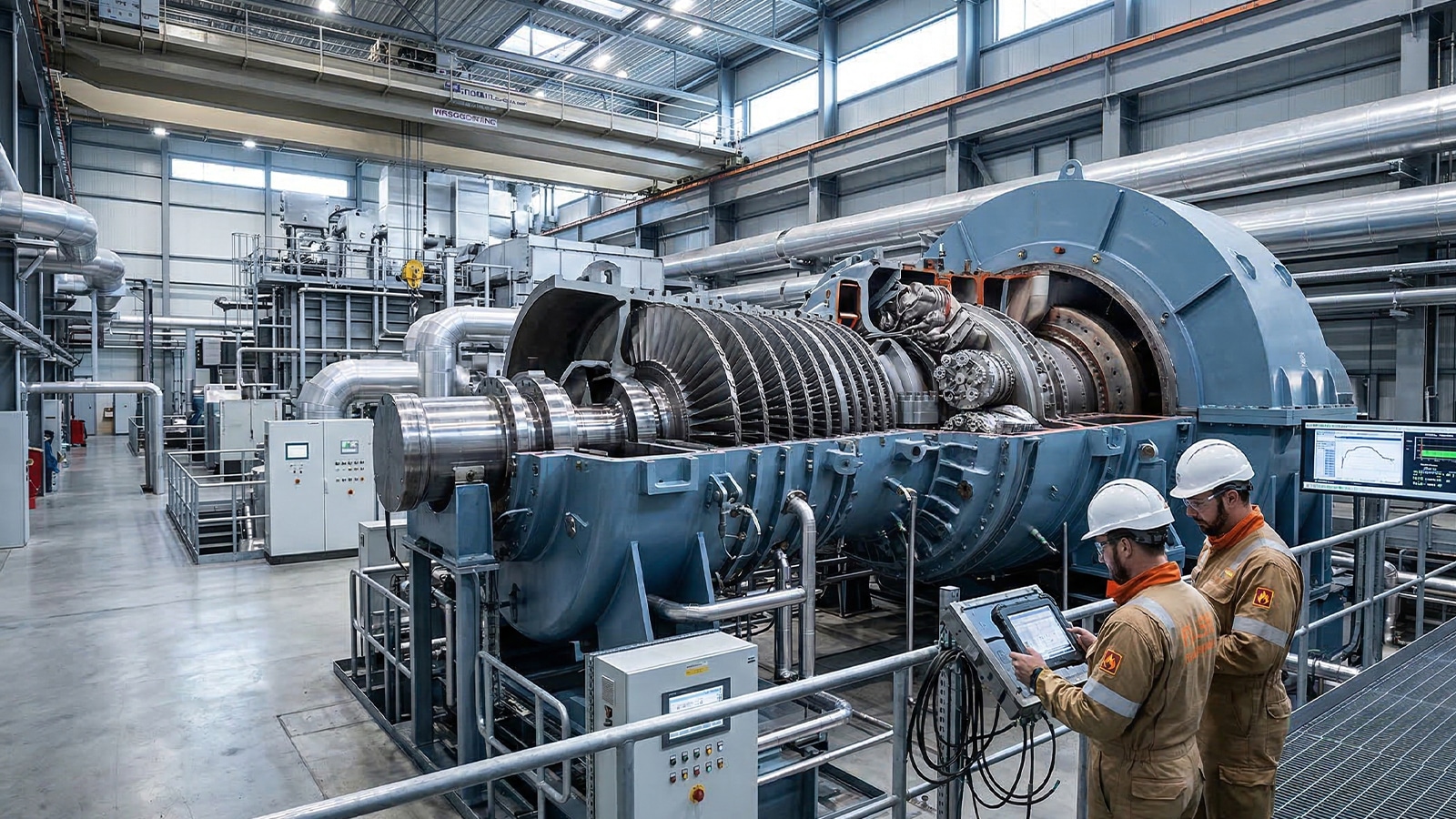
Modern 7FA gas turbines generate detailed operational data — exhaust temperature spreads, dynamic pressure readings, fuel flow splits, and inlet temperature profiles — that can be used to continuously refine combustion performance. Operators who analyze this data systematically are better positioned to detect instability trends before they result in outage events or hardware damage.
The best-performing 7FA units treat control system tuning as an ongoing operational discipline, not a commissioning step.
Outage Planning and Long-Term Maintenance
Part Load Operation and Hot Section Life
F-class heavy duty gas turbines like the 7FA accumulate equivalent operating hours toward hot section inspection intervals based on their combustion profile. Part load operation introduces different thermal cycling patterns than steady-state base load running — and those patterns directly affect the alloy components in the combustor, transition pieces, and first-stage nozzle.
Accurately tracking equivalent operating hours that account for part load combustion cycles ensures that outage intervals remain aligned with actual hardware condition, preventing both premature maintenance and overextended intervals that risk unplanned failures.
What to Inspect After Extended Part Load Operation
Each planned outage following an extended part load period should prioritize inspection of the combustion system and fuel delivery components. Fuel nozzle coking, combustor liner erosion, and transition piece cracking are the most common findings — and their severity correlates directly with how aggressively the combustion system was cycled through its turndown range.
When Allied Power Group performs combustion inspections on GE 7FA gas turbines from their Houston, Texas operations, combustion hardware findings are used to generate specific tuning recommendations for the next operating cycle, closing the loop between inspection data and optimized part load performance.
Conclusion
Optimizing GE 7FA part load operations demands equal parts engineering precision, data discipline, and proactive outage planning. From managing dynamic pressures through the DLN-2.6 combustion system to maintaining HRSG performance in combined cycle applications, every layer of the 7FA gas turbine is affected by how the unit operates below its rated output.
The plant operators who achieve the best turbine performance across the load range are those who treat combustion tuning, inlet management, and outage planning as interconnected elements of a single optimization strategy. When maintenance alone isn’t enough and your 7FA gas turbine needs expert combustion service, inspection support, or performance analysis, Allied Power Group are the experts.
Frequently Asked Questions
What causes combustion instability in the GE 7FA during part load operation?
Combustion instability at part load is primarily caused by reduced inlet air flow and the narrowed stability margins of the DLN-2.6 combustion system as it transitions between fuel modes. Elevated dynamic pressures and fuel nozzle imbalances are the most common indicators that combustion tuning is needed.
How does turndown affect NOx emissions in a 7FA gas turbine?
At reduced loads, maintaining the lean premix combustion conditions that deliver low NOx becomes more difficult as the combustion system operates with less thermal and air flow margin. Precise valve positioning and fuel nozzle circuit management are essential for staying within NOx emissions compliance during turndown operation.
When should combustion tuning be performed on a GE 7FA?
Combustion tuning should be scheduled after every planned outage, following any significant change in fuel gas composition, or whenever dynamic pressure readings trend above established baseline levels. Seasonal ambient temperature shifts are also a common driver for tuning adjustments on 7FA gas turbines operating in variable climates.
How does GE 7FA part load operation impact combined cycle plant performance?
At part load, exhaust temperature profiles shift and the energy content of the exhaust gas available to the HRSG decreases. This reduces steam generation and overall combined-cycle efficiency, making exhaust temperature management and turbine inlet optimization critical considerations for combined-cycle power plant operators.
What combustion components should be prioritized during outage inspections after extended part load cycles?
Fuel nozzle condition, combustion liner wear, and transition piece integrity should be the primary inspection focus after extended part load operation. These components absorb the greatest stress from dynamic pressure events and thermal cycling, and their condition directly informs combustion tuning decisions and maintenance cost projections for the next operating period.