

Your Power Partner
Common GE 7FA Gas Turbine Failure Modes and What Causes Them
A trip without warning. A borescope image that shows something nobody expected. The question that follows is always the same: how serious is this?
The most common 7FA failure modes cluster into four zones: the hot gas path, the combustion system, the compressor, and the rotor and bearing assembly. Knowing which one you’re looking at is the fastest way to move from uncertainty to a clear next step. If you’re weighing repair options for a GE 7FA gas turbine, this breakdown is the place to start before you request a hot gas path inspection or full major overhaul through our GE Frame 7F service team.
The GE 7FA fleet is large and well documented. Roughly 900 units operate worldwide, accounting for close to 15% of North America’s electricity generation capacity, with the fleet logging more than 50 million operating hours [1]. That scale means failure patterns are well understood, even when a specific finding on your unit still feels uncertain.
Key Takeaways
- GE 7FA gas turbines fail most often in four zones: the hot gas path, the combustion system, the compressor, and the rotor, bearing, and casing assembly.
- Firing temperature, start-stop cycling, and inlet air quality drive most of the degradation seen across the fleet.
- Rotor components carry a hard end-of-life limit near 144,000 Fired Factored Hours or 5,000 Fired Factored Starts, whichever comes first.
- Catching problems at the Combustion Inspection (CI) or Hot Gas Path Inspection (HGPI) stage keeps a repair scheduled instead of forced.
- Choosing between an OEM, an independent specialist, or an in-house crew depends on failure severity, parts lead time, and available diagnostic depth.
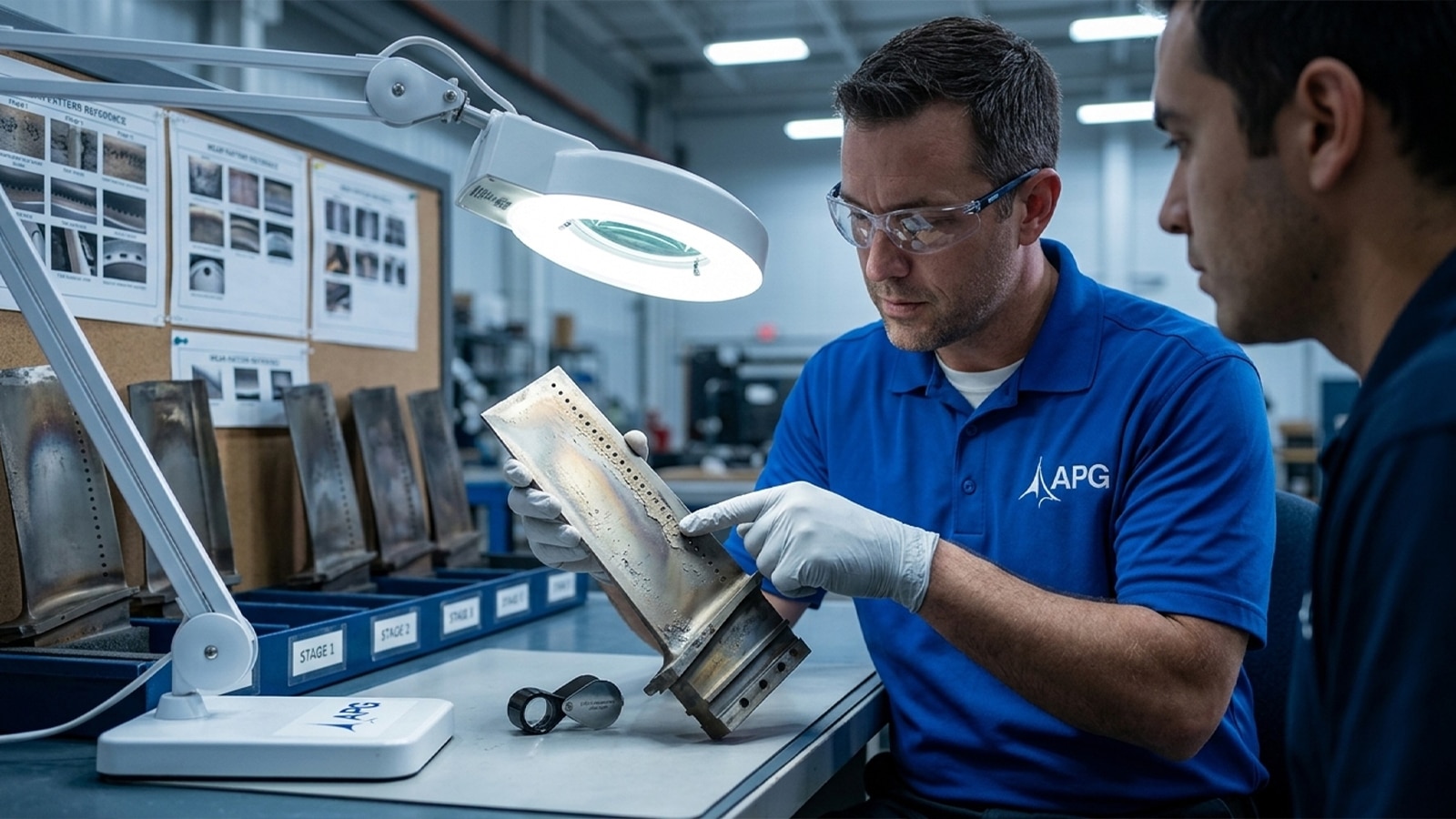
What Causes Cracking in GE 7FA Turbine Blades?
The hot gas path sees the highest gas temperatures anywhere inside the turbine, which is why degradation shows up here first and costs the most to repair. Stage 1 and Stage 2 turbine blades bear the brunt of this exposure, and their condition tells you more about overall gas turbine health than almost any other turbine components.
Cracking in these blades comes mainly from thermal fatigue caused by repeated start-stop cycling, combined with long exposure to high firing temperatures. Each cycle expands and contracts the metal. Over enough cycles, small cracks form at stress points, especially around cooling holes and trailing edges.
TBC Spallation and Oxidation Risk
Thermal barrier coating (TBC) is applied to first-stage blades and nozzles to insulate the base metal from combustion heat. When TBC spalls, or flakes away, the exposed metal underneath suddenly faces oxidation and thermal stress it was never built to handle directly. Ambient temperature swings during frequent starts make this worse, since the coating and base metal expand at different rates.
Creep vs. Low-Cycle Fatigue
Creep and low-cycle fatigue (LCF) are related but different. Creep results from sustained load at high temperature and causes gradual, permanent deformation, even without a change in cycle count. LCF comes from the repeated stress of starts and stops. A borescope inspection can catch surface signs of both, but telling subsurface creep damage apart from cosmetic wear usually takes trained interpretation. If you’re not sure which one you’re looking at on a recent borescope report, our hot gas path inspection guide walks through what that inspection should include.
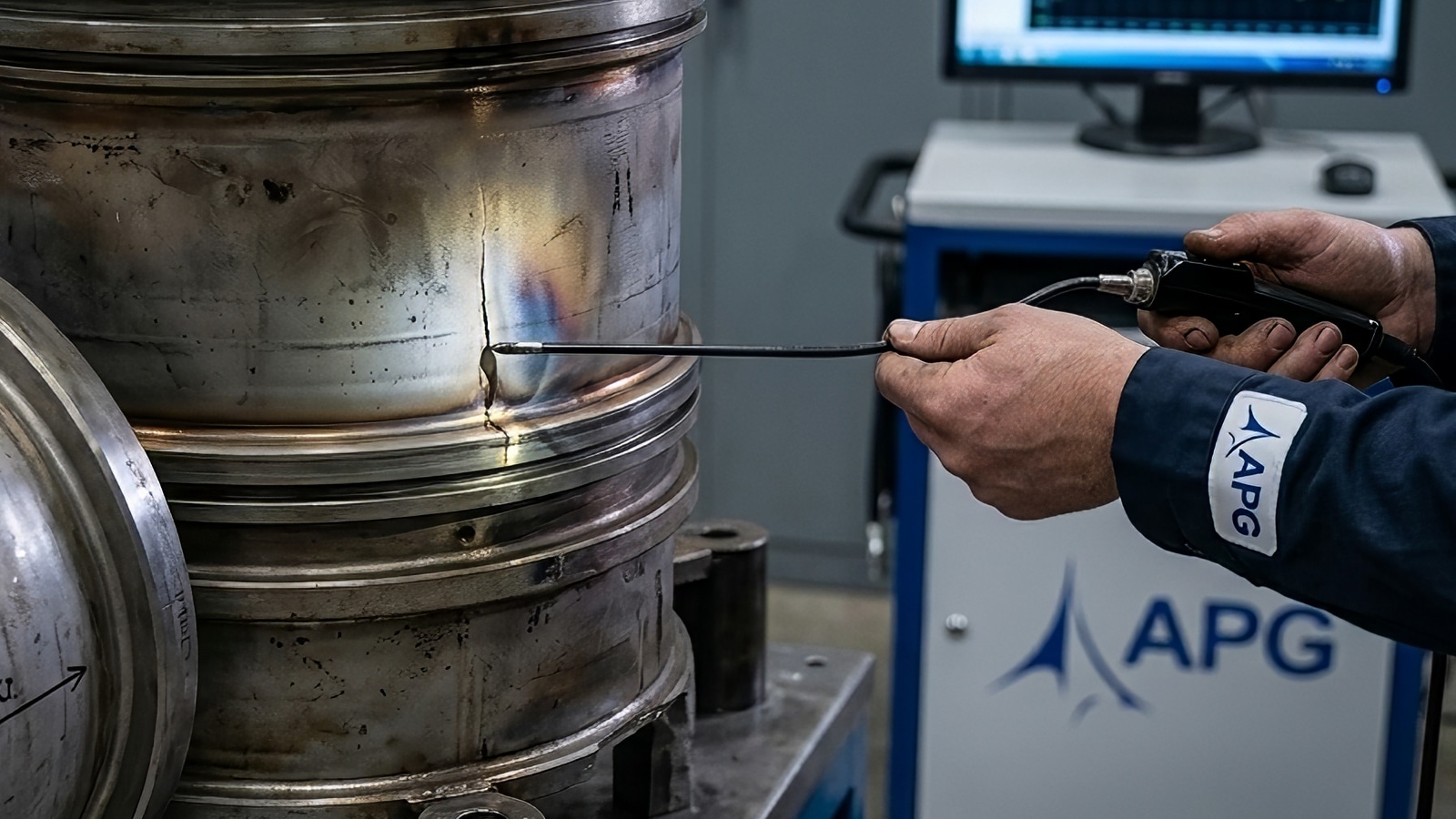
What Is the Typical Life Span of a GE 7FA Combustion Liner?
A GE 7FA combustion liner typically lasts between 8,000 and 24,000 fired hours, depending heavily on duty cycle. Units that cycle often see shorter liner life than baseload units, since each start puts a thermal cycle on the liner it has to absorb. A Combustion Inspection is the right point to check actual condition against that range instead of assuming a fixed number.
Transition Piece Distress and Cooling Hole Wear
Transition pieces carry combustion gases from the liner into the first-stage nozzle. They take on wear in the form of cracking, distortion, and cooling hole damage. Once cooling holes wear down or clog with buildup, local hot spots form, which speeds up the very damage the cooling was meant to prevent.
DLN 2.6 Tuning and Flashback Risk
The DLN 2.6 combustion system controls emission output by managing fuel-air mixing across multiple nozzles in the gas turbine’s combustion cans. When tuning drifts, the result can be flashback or flame-holding events, where the flame moves upstream of where it should sit. These issues often show up first as emission excursions on the control system, before any physical damage appears, which makes tuning drift one of the more preventable failure paths when caught during a scheduled outage rather than after a trip. For liner-specific repair depth, see our guide on combustion liner repair and replacement.
Why Do GE 7FA Compressor Blades Fail?
The compressor section is where ambient air first enters the turbine, and it’s the section most directly shaped by site conditions and maintenance discipline rather than pure design limits. GE 7FA compressor blades fail mainly due to fouling, solid particle erosion, corrosion pitting, and foreign object damage. All of these trace back to inlet air quality. The condition of the inlet filtration system is the single largest controllable factor affecting compressor blade life, since it determines how much contaminant reaches the blades and how quickly they foul.
Fouling and Filtration Gaps
Fouling happens when airborne particles, oils, and waxes build up on compressor blade surfaces, changing their aerodynamic shape and cutting airflow efficiency. Unlike erosion or corrosion, fouling can largely be reversed through on- and offline washing. Plants that track heat rate deviation closely often catch this failure mode before it turns into visible damage.
Erosion, Corrosion Pitting, and FOD
- Solid particle erosion wears away blade material over time, changing blade shapes and reducing compressor efficiency
- Corrosion pitting develops when moisture and contaminants react with blade surfaces, creating weak points where cracks can start
- Foreign object damage happens when debris, often from a filtration failure or a dropped tool during an outage, enters the compressor and causes sudden, localized blade damage
Unlike fouling, none of these three can be reversed through cleaning. Once erosion or pitting sets in, the affected compressor rotor blades need repair or replacement to restore reliable performance.
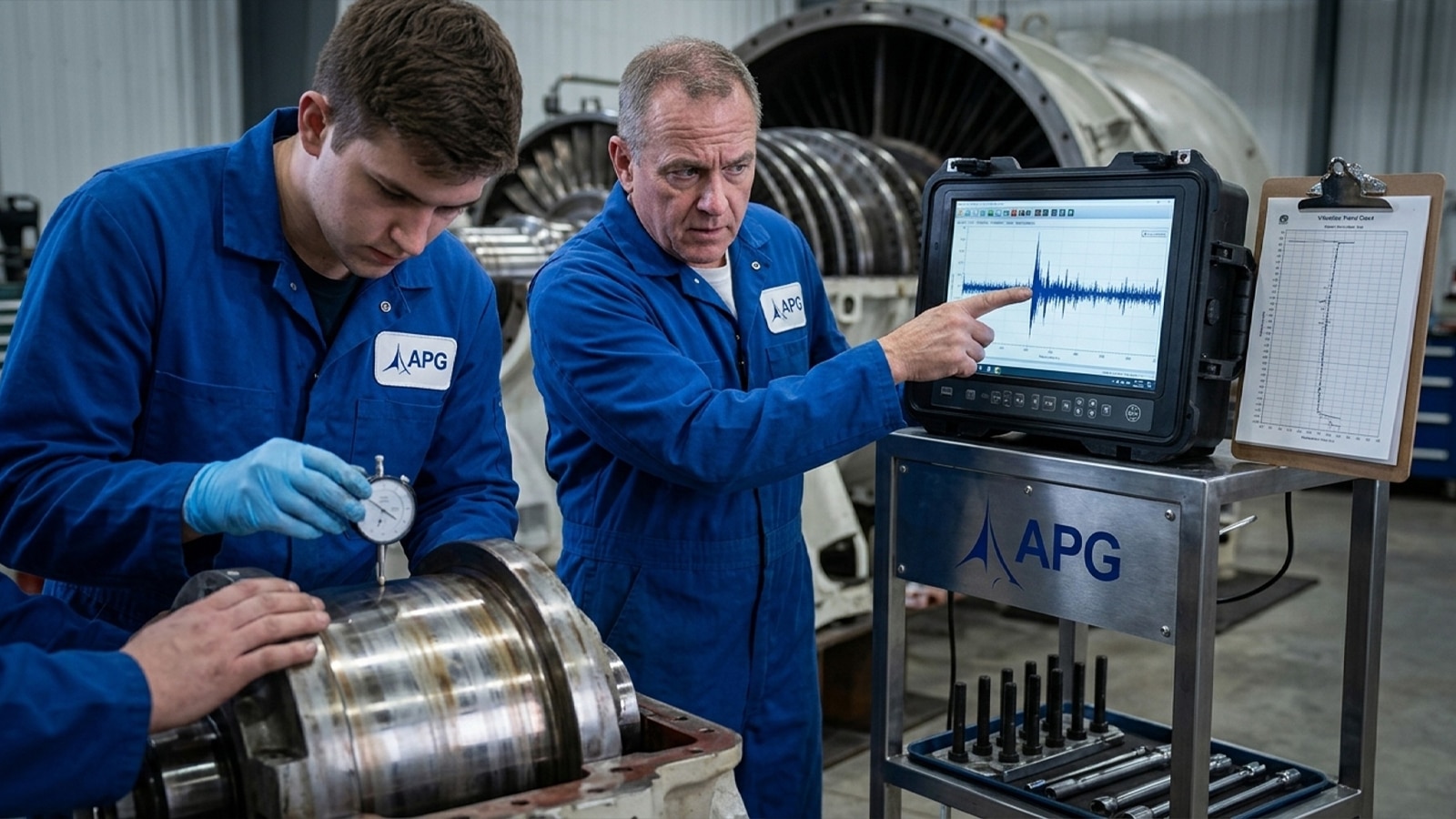
What Causes Bearing Failures in GE 7FA Turbines?
Bearing failures in GE 7FA turbines are caused mainly by lubrication breakdown, contamination of the oil supply, and shaft misalignment. Industry data on industrial turbine bearings links roughly 70% of shutdowns to these three root causes, acting alone or together [2]. Problems in the rotor, bearing, and casing assembly tend to trigger the most urgent phone calls, because they’re often first spotted through vibration alarms rather than a scheduled inspection.
Vibration as an Early Warning Signal
Vibration is often the first measurable sign that something in the rotor or bearing system has shifted, whether that’s imbalance, misalignment, or early-stage bearing wear. Exhaust-end bearing condition can also affect generator shaft alignment, which is why a vibration trend that looks minor at first can escalate quickly. Reading a vibration signature correctly takes trending and pattern recognition, which our vibration analysis guide covers in more depth.
Thermal Cycling and Casing Distortion
Casing distortion builds up gradually across many thermal cycles rather than appearing all at once. Repeated heating and cooling shifts internal clearances between the rotor and stator, which can eventually hurt performance and, in more advanced cases, contribute to rub events. In combined-cycle plants, a steam turbine shares the power block with the gas turbine, and while it isn’t exposed to the same firing temperatures, casing and rotor distortion follow similar thermal-cycling logic on both machines.
| Failure Mode | Typical Cause | Detection Method | Recommended Inspection Interval |
|---|---|---|---|
| Stage 1/2 blade cracking | Thermal fatigue, firing temperature excursions | Borescope, fluorescent penetrant inspection | Hot Gas Path Inspection |
| TBC spallation | Coating bond failure, thermal cycling | Borescope, visual inspection | Hot Gas Path Inspection |
| Combustion liner cracking | Flame temperature imbalance, cycling | Borescope, CI findings review | Combustion Inspection |
| Compressor fouling | Airborne contaminants, filtration gaps | Performance trending, visual inspection | Ongoing, verified at CI |
| Compressor erosion/pitting | Inlet air quality, particulate ingestion | Borescope, blade profile measurement | Hot Gas Path Inspection |
| Bearing wear | Lubrication breakdown, contamination, misalignment | Vibration analysis, oil analysis | Continuous monitoring, confirmed at Major Inspection |
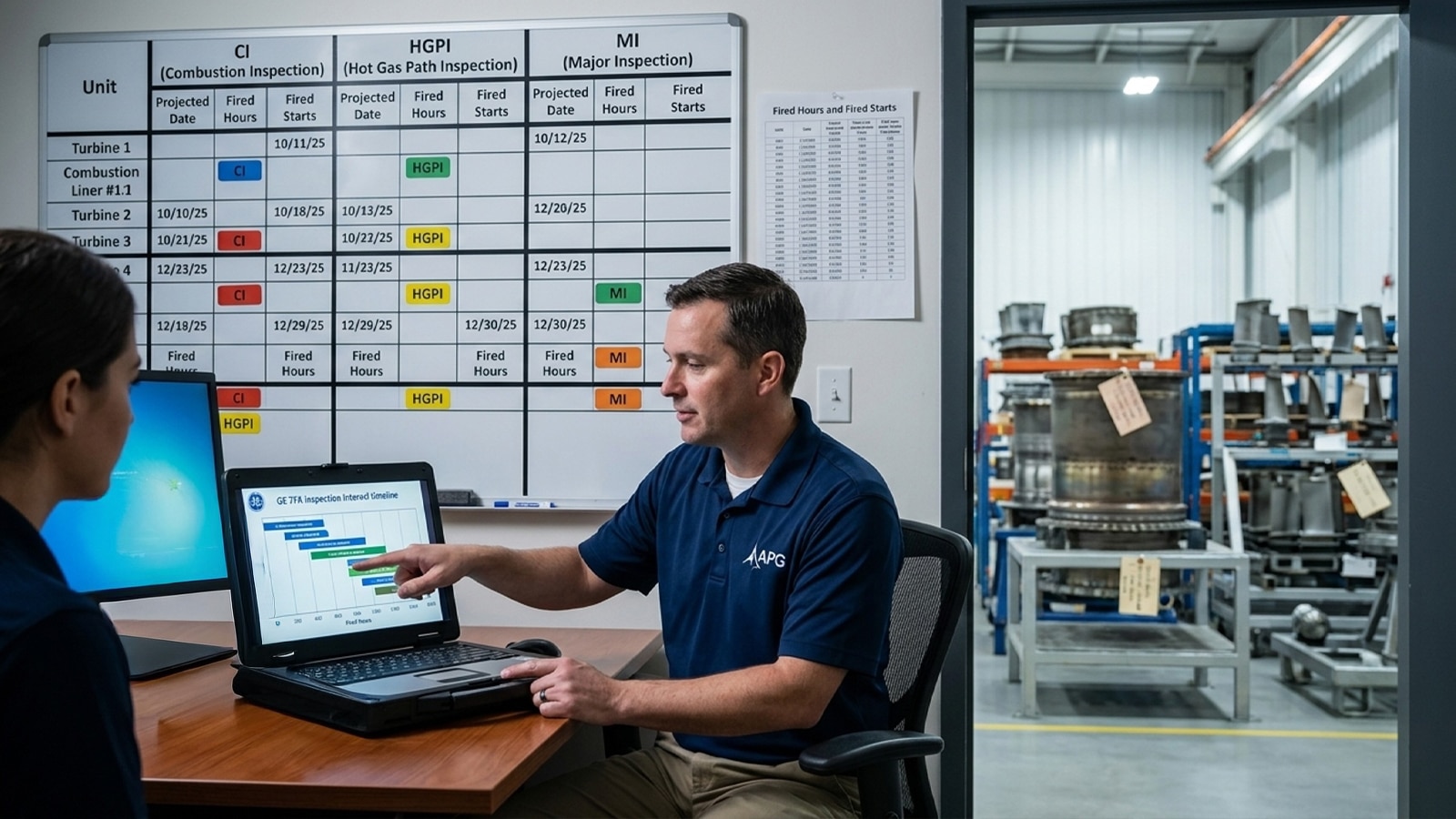
How Do Inspection Intervals Prevent These Failures?
Nearly every failure mode above has a detectable early stage. The Combustion Inspection is usually the first checkpoint, focused on liners, transition pieces, and fuel nozzles. The Hot Gas Path Inspection comes next, covering Stage 1 and Stage 2 blades, nozzles, and TBC condition. The Major Inspection is the deepest checkpoint, covering the rotor, bearings, and casing, and it’s where hard limits like Fired Factored Hours and Fired Factored Starts matter most.
Sites that align inspection timing with actual duty cycle, rather than a generic calendar schedule, tend to catch cracking, spallation, and bearing wear while they’re still repair-scope items instead of replace-scope items. Turbines built to API 611 or API 612 standards for mechanical design and testing still depend on this inspection discipline to perform as intended over their service life. The standard sets the design baseline; the inspection schedule is what keeps the unit tracking against it.
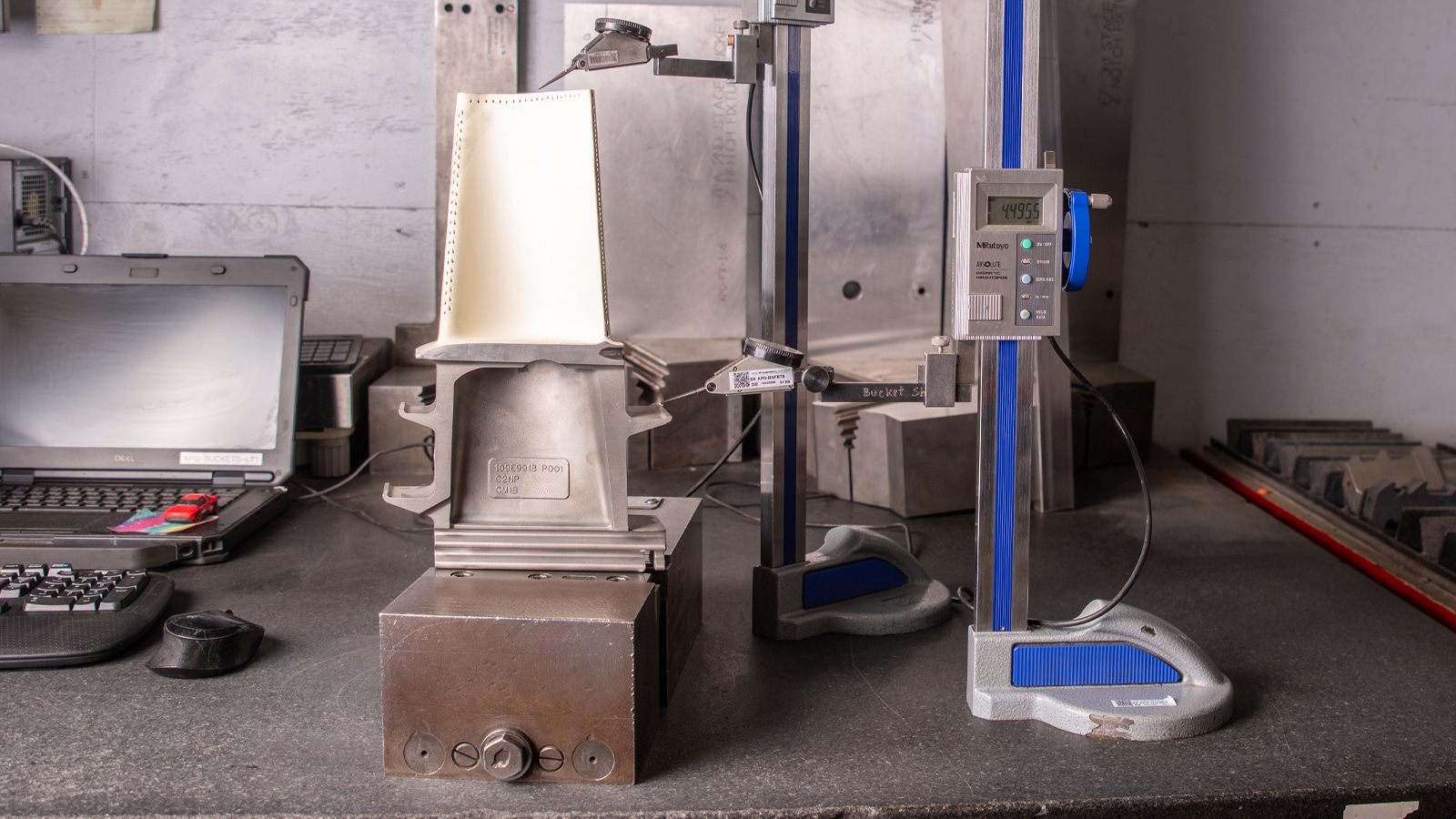
Should Your Repair Go to an Independent Specialist, OEM, or In-House Crew?
Once a failure mode is identified, the next decision is who repairs it. The right call usually comes down to three factors: how severe the finding is, how fast parts can be sourced, and how much diagnostic depth the situation calls for.
- An in-house crew is a good fit for routine maintenance, minor borescope follow-ups, and inspection tasks that don’t require specialized tooling or metallurgical evaluation.
- OEM support makes sense when a repair needs proprietary parts, warranty coverage, or design-level engineering input.
- An independent specialist often fits best when turnaround time matters, when the finding needs deeper diagnostic work than a routine inspection provides, or when a repair-versus-replace decision needs an unbiased cost comparison.
We recently reviewed borescope findings for an operator who had been quoted a full nozzle replacement by their OEM contact after a routine CI flagged coating wear. A closer diagnostic review showed the damage was surface-level TBC loss, not the subsurface cracking the initial quote assumed, and the unit qualified for a coating repair instead. The site kept its scheduled outage window and avoided a six-figure parts order it didn’t need. That’s the kind of gap a second opinion can close before scope gets locked in.
Turning Failure Mode Knowledge Into the Right Next Step
Every failure mode covered here can be diagnosed, and nearly all of them can be repaired when caught at the right inspection stage rather than after a forced shutdown. The pattern holds across the hot gas path, the combustion system, the compressor, and the rotor and bearing assembly: knowing the root cause early is what keeps a repair scheduled instead of turning it into an emergency, and what keeps a gas turbine asset earning revenue instead of sitting in an unplanned outage.
You don’t need to resolve every open question about your unit before picking up the phone. If you have borescope findings, vibration data, or performance trends you want reviewed against the failure modes covered here, call Allied Power Group at (281) 444-3535 or start with our GE Frame 7F service page and let us look at your specific numbers before you lock in outage scope.
FAQ
How often should GE 7FA hot gas path components be inspected?
GE 7FA hot gas path components follow an inspection schedule tied to Fired Factored Hours and Fired Factored Starts, not calendar time alone. Most operators plan a Combustion Inspection first, followed by a Hot Gas Path Inspection at a longer interval, and eventually a Major Inspection that covers the rotor. Because duty cycle varies so much between baseload and cycling units, an accurate interval depends on reviewing actual operating history.
How much does a GE 7FA hot gas path inspection cost?
A GE 7FA hot gas path inspection cost varies widely depending on how severe the findings are, parts availability, and outage duration. Units that only need coating touch-up and minor blade repair sit at the lower end, while units needing blade or nozzle replacement due to cracking or erosion push costs much higher. Getting an accurate number requires a specialist review of your actual borescope and performance data rather than a flat estimate.
What is the typical life span of a GE 7FA combustion liner?
A GE 7FA combustion liner typically lasts between roughly 8,000 and 24,000 fired hours, with the exact figure depending on how often the unit starts and stops. Units running mostly baseload see longer liner life than units cycling daily. A Combustion Inspection gives a duty-cycle-specific estimate rather than relying on a published average.
Why do GE 7FA compressor blades fail?
GE 7FA compressor blades fail mainly due to fouling, erosion, corrosion pitting, and foreign object damage, nearly all traceable to inlet air quality. Proper air filtration is the most effective preventive measure, though telling apart reversible fouling from permanent erosion or corrosion damage requires trained visual and performance-based inspection.
What causes bearing failures in GE 7FA turbines?
Bearing failures in GE 7FA turbines trace mainly to lubrication breakdown, oil contamination, and shaft misalignment, the same three factors linked to most industrial turbine bearing shutdowns [2]. Vibration analysis is the right diagnostic tool for confirming a developing bearing issue, rather than relying on visual inspection alone.
When should a 7FA repair go to an independent specialist vs. OEM vs. in-house crew?
Failure severity, parts lead time, and available diagnostic depth determine the right repair path for a given finding. In-house crews are well suited to routine maintenance and basic inspection tasks. OEM support fits situations that need proprietary parts or warranty coverage. An independent specialist often bridges the gap when you need faster turnaround, deeper diagnostic capability, or a more cost-effective repair-versus-replace evaluation, which matters most when a power generation deadline is tight and downtime is costly.
What causes cracking in GE 7FA turbine blades?
Thermal fatigue, creep under sustained high-temperature load, and repeated start-stop cycling combine to cause most cracking in GE 7FA turbine blades. A professional evaluation that combines borescope findings with metallurgical review is the reliable way to confirm the specific root cause before finalizing repair scope.