

Your Power Partner
GE 7FA Transition Piece Repair
You just walked off an inspection, and the news wasn’t good. Cracking along a weld seam. Some distortion in the aft frame. Maybe coating loss you weren’t expecting to see this early in the cycle. Finding damage on a 7FA transition piece isn’t a crisis, it’s a decision point, and the right call depends on data your team probably doesn’t have on hand yet.
That’s exactly what our GE Frame 7F turbine repair and inspection team looks at every day, and getting them a look at your findings before you commit to a scope is usually the fastest way to real answers. The 7FA platform is one of the most widely deployed heavy-duty gas turbine frames in power generation, so this exact decision plays out at plants every outage season.
Key Takeaways
- Visual grading alone cannot tell you which cracks are progressing versus stable. That distinction requires metallurgical review, not a walk-down.
- TBC spallation that looks cosmetic can expose base metal to oxidation and accelerate wall thinning within a single operating cycle.
- Welding repairs on Hastelloy X and similar superalloy substrates require qualified procedures and post-weld heat treatment most plants aren’t equipped to perform or verify in-house.
- Waiting past the point of repairability can push you into new-part lead times of 6-12+ months, right when you need the unit back online.
- A wrong in-house serviceability call can create warranty and liability exposure if the unit fails after being cleared internally.
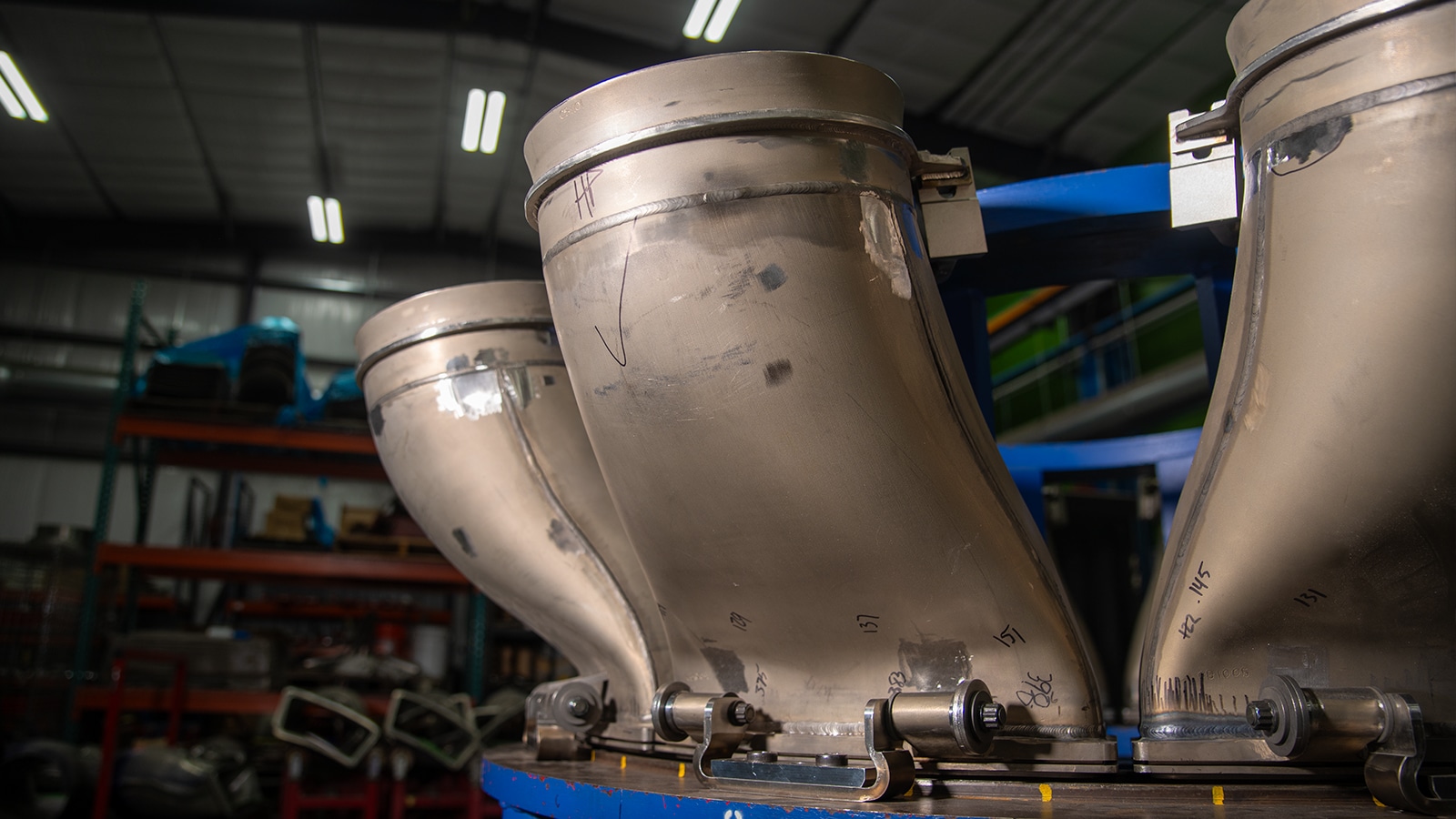
Why Your 7FA Gas Turbine Inspection Findings Need More Than a Visual Grade
Cracking, distortion, and coating loss on a 7FA transition piece each carry different implications, and they don’t always mean what they look like at first glance. A hairline crack near a cooling hole might be stable for another full cycle, or it might be three weeks from propagating through-wall. From a visual inspection alone, there’s often no reliable way to tell.
Cracks: Progressing vs. Stable
Crack length and location matter, but so does crack growth rate, and that’s not something you can eyeball. Two transition pieces with identical-looking cracks can have completely different remaining life, depending on where the crack sits relative to the weld heat-affected zone and how the base material has responded to thermal cycling over time.
Aft frame distortion adds another layer: it rarely happens in isolation, and it’s often a downstream symptom of combustion dynamics issues, liner wear, vane clearance shifts, or clearance problems elsewhere in the hot gas path. Treating the transition piece as an isolated fix without asking why it distorted in the first place is how plants end up back in the same spot the following outage.
Coating Loss Is Not Cosmetic
TBC spallation can look like a minor issue, a patch of exposed metal here and there. But once the coating is gone, the base metal is exposed to oxidation, and wall thinning can accelerate faster than most maintenance schedules account for. A proper hot gas path inspection evaluates the transition piece as a hot gas path component in the context of the full gas path and combustion components, including turbine rotor clearances downstream, because transition piece condition affects mechanical dynamics across the whole assembly.
Why Superalloy Welding Isn’t a Field Job
Transition pieces are typically fabricated from Hastelloy X or similar superalloys, and repairing them correctly means qualified welding procedures paired with controlled post-weld heat treatment. Most plants don’t have this capability on-site, and a weld repair that skips or shortcuts this step can look fine on the surface while carrying hidden risk into the next run. This is the gap between grading damage and confirming it, and it’s exactly what engineering-grade inspection data resolves before a repair scope gets locked in.
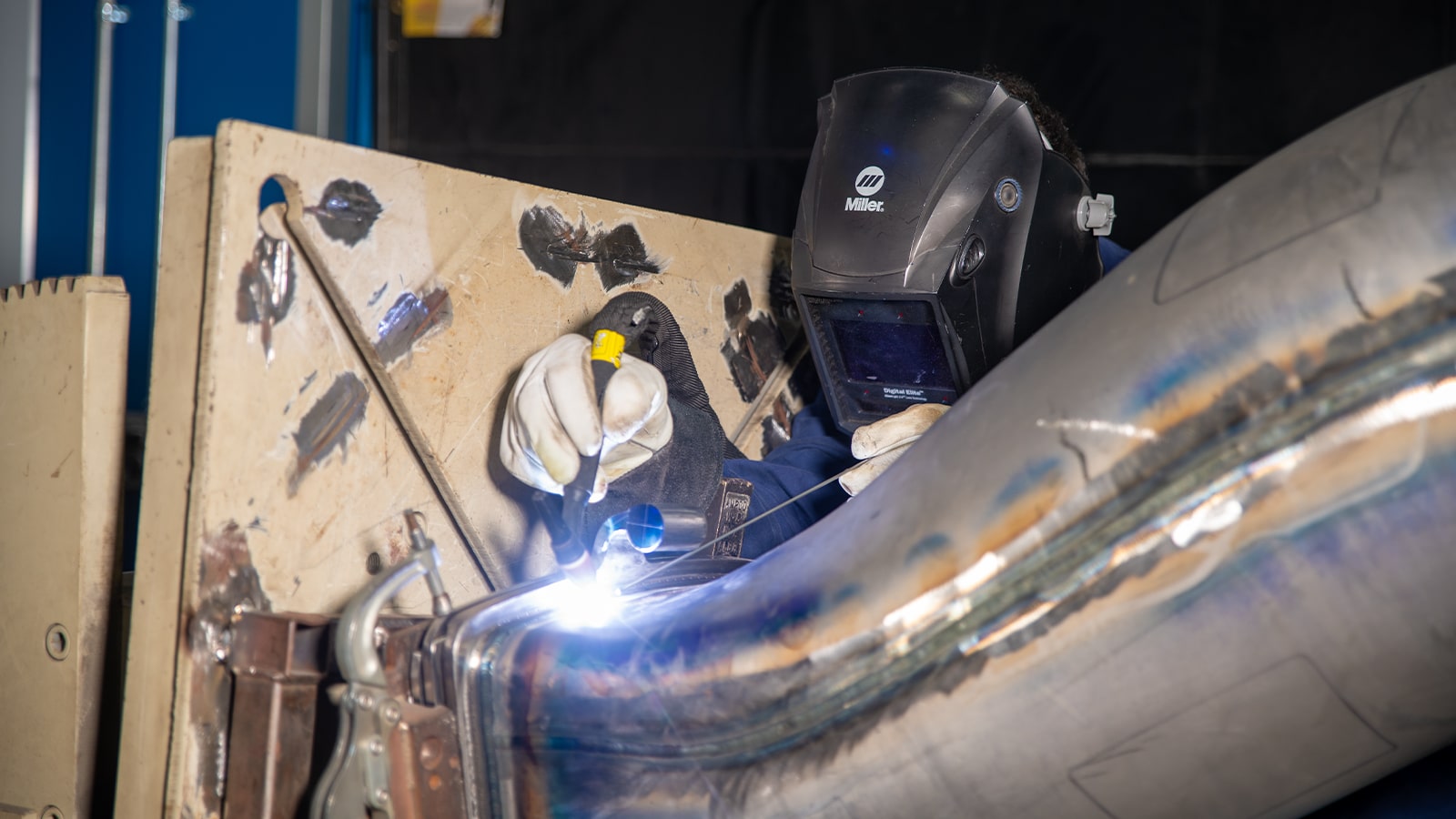
What a Qualified Repair Program Actually Covers
A real 7FA gas turbine component repair program treats transition pieces, liners, nozzles, stage buckets, and combustion parts as one integrated scope rather than a single-part fix. We recently reviewed a unit where a plant’s internal team had cleared a transition piece with minor coating loss as low-priority, only to find during a documented inspection that wall thickness at one panel had already dropped below the repairable threshold. Catching it before the outage meant a scheduled repair instead of a forced one.
From One Component to the Full Gas Path
Repair techniques like blend repair, braze repair, and bucket tip restoration require documented procedures and repair history to qualify as OEM-equivalent for gas turbine components. That standard applies across GE 7FA and comparable frames, including advanced gas path upgrades, and it extends to related platforms like 9FA gas turbines, fuel nozzles, and 7FA.04 first-stage blade components where the same tolerance discipline applies.
Why Dimensional Tolerances Decide the Outcome
Missing dimensional and fit tolerances during a rushed repair can cause combustion dynamics issues or downstream hot gas path damage, the kind of thing that turns a $200K repair into a $2M event. Being able to weld metal isn’t the same as being able to restore OEM-equivalent serviceability, and that gap is exactly why this decision benefits from engineering review rather than a field call made under outage-week pressure.
What Happens If You Wait To Start The Repair Process
Delay has a cost, and it compounds quietly.
- A progressing crack that isn’t caught early has more time to work its way through-wall, turning a controlled repair into an unplanned forced outage.
- If a transition piece fails and damages adjacent hot gas path hardware, the repair scope and downtime can multiply well beyond what the original finding suggested.
- Miss the window where repair is still viable, and you’re locked into new-part lead times that can run 6-12 months or more, timing that rarely lines up with your outage schedule.
- If your team clears a unit internally and it fails afterward, that call can create warranty complications or liability exposure that a documented engineering review would have avoided.
| Path | Typical Cost | Typical Lead Time | Key Risk If Wrong Call |
|---|---|---|---|
| Qualified repair | Fraction of new-part cost | Often fits within a scheduled outage | Under-scoped repair fails early |
| Full replacement | Premium new-part pricing | 6-12+ months | Missed outage, extended downtime |
| Run-to-failure | Unplanned, highest total cost | Unplanned forced outage | Collateral hot gas path damage |
None of this means panic. It means the decision deserves a closer look before it’s finalized, ideally from someone who reviews this exact damage pattern on a regular basis.
Conclusion
Finding damage on a 7FA transition piece during inspection is a common moment for plant managers, not a rare one. The difference between a routine repair and a forced outage isn’t the crack you can see, it’s the engineering analysis behind it: borescope data, material condition, crack growth behavior, and how those factors stack up against your remaining run time before the next outage. That’s not a call your team should have to make alone.
If you’re weighing repair against replacement right now, request a free 7FA transition piece damage assessment. Our turbine repair engineers will review your inspection data and give you a clear repair-or-replace recommendation, typically within 24-48 hours, fast enough to fit inside most outage planning windows. Call (281) 444-3535 or send over your inspection data and let’s sort out the real risk from the routine before your outage window closes.
Frequently Asked Questions
How do I know if a 7FA transition piece crack is repairable or needs replacement?
Repairability comes down to crack location, depth, and growth behavior, along with the condition of the surrounding base material. This typically requires a metallurgical review rather than a visual inspection alone, since two similar-looking cracks can have very different remaining life.
Can transition piece coating loss wait until the next scheduled outage?
Coating loss can sometimes wait, but only after the extent of TBC spallation has been measured against your remaining run time. Once base metal is exposed to oxidation, wall thinning can progress faster than expected within a single operating cycle, so this shouldn’t be assumed without a review.
What’s the risk of doing the repair in-house?
In-house repair carries real risk because proper transition piece repair requires qualified welding procedures for superalloy substrates like Hastelloy X, controlled post-weld heat treatment, and OEM-equivalent dimensional tolerances. Missing any of these can lead to downstream combustion dynamics issues or hot gas path damage, a much larger and more expensive problem than the original repair.
How long does it take to get a repair-or-replace recommendation?
Allied Power Group typically turns around a damage assessment and clear recommendation within 24-48 hours of receiving inspection data, fast enough to fit inside most outage planning windows.
What if we wait too long to decide?
Waiting past the point where repair is still viable can force an unplanned full replacement, and new transition pieces often carry lead times of 6-12 months or more. Getting ahead of the decision, even by a few weeks, preserves more options.
What’s the difference between a hot gas path inspection and a major inspection?
A hot gas path inspection covers the transition piece, liners, nozzles, and buckets, while a major inspection extends further to include the turbine rotor and additional internal components. Choosing the wrong inspection tier can miss transition piece issues entirely, which is why scope should match what your unit’s operating hours and prior findings actually call for.
If you’re sitting with inspection findings right now and aren’t sure which way to go, requesting a free 7FA transition piece damage assessment is a low-friction way to get clarity. Call (281) 444-3535 or send over your inspection data, and Allied Power Group’s turbine repair engineers will help you sort out the real risk from the routine before your outage window closes.